
Buy anything from 5,000+ international stores. One checkout price. No surprise fees. Join 2M+ shoppers on Desertcart.
Desertcart purchases this item on your behalf and handles shipping, customs, and support to KSA.
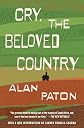
“The greatest novel to emerge out of the tragedy of South Africa, and one of the best novels of our time.” — The New Republic “A beautiful novel…its writing is so fresh, its projection of character so immediate and full, its events so compelling, and its understanding so compassionate that to read the book is to share intimately, even to the point of catharsis, in the grave human experience.” — The New York Times An Oprah Book Club selection, Cry, the Beloved Country , was an immediate worldwide bestseller when it was published in 1948. Alan Paton’s impassioned novel about a black man’s country under white man’s law is a work of searing beauty. Cry, the Beloved Country , is the deeply moving story of the Zulu pastor Stephen Kumalo and his son, Absalom, set against the background of a land and a people riven by racial injustice. Remarkable for its lyricism, unforgettable for character and incident, Cry, the Beloved Country is a classic work of love and hope, courage and endurance, born of the dignity of man. Review: A real masterpiece - This book does a great job in describing the life in South Africa during the apartheid regime. The plot is engaging and captivating, though some parts present very harsh life conditions. The author is a magician of the written word. Some parts are nothing less than poetic prose. He was able to reflect the Zulu language in rythm and grammar while writing in pure English. The characters are deep and round. Though the basic plot and the overall situation is tragetic and depressing, hope is never lost. The two giant beloved characters, Kumalo and Jarvis, entangled by their joint tragedy, show us that even under the worst conditions and after grieving the most painful loss, there is a much better way than eternal hate and revenge. They show us that a lot of agony can be avoided if people choose love and compassion rather than hate and segregation. They show the right way native African should have been treated, without breaking the tribes' social structures that led to lost generations that live desolate life which drives them to crime and brutality that yield havoc on all people, black and white altogether. Review: You Should Read This Book - A wonderful, profound, and very beautiful book. As other reviewers have noted, it was written by a white South African in the late 1940's, and is set in that time and place, just before apartheid was officially imposed. It tells the story of Stephen Kumalo, a black minister from the countryside, who travels to Johannesburg to find his sister, and his son, both of whom have have vanished into the great city. He finds them, but his son has killed a white man, and his sister is a prostitute. The full story is described elsewhere; suffice it to say that it ends tragically, but with redeeming grace. The language of this book is amazing, poetic but also critical in the development of character. In large part the book is a love song to the land of South Africa, a place of great natural beauty which has been badly treated by man. But the language is also wonderful in expressing different personalities, different experiences, and different ways of thinking -- it changes and shifts with the subject. The plot and characterization are very powerful. The people are rounded, neither all good nor all bad, and each speaks with his or her own voice. The story pulls one forward with the minister on his journey -- I read this almost without stopping. To a degree, some elements may be jarring for some readers today, particularly readers of color. The book was written almost seventy years ago, and it was written by a white South African, perhaps with the intention of reaching other white South African. The ideas are compelling, and go far beyond the political. For me, the novel as a whole is about many things, about forgiveness and redemption and the tragedy of death and the miracle of new life The politics, of course, can't help but dominate the foreground. It is sad to think that the subjugation of South Africa's blacks continued for most of the next 50 years. But it is also inspriring to remember that apartheid ended without a civil war, and with reconciliation rather than revenge. A great book, worthy of its subject..


| Best Sellers Rank | #16,638 in Books ( See Top 100 in Books ) #4 in African Literature (Books) #597 in Classic Literature & Fiction #1,268 in Literary Fiction (Books) |
| Customer Reviews | 4.5 out of 5 stars 3,350 Reviews |
B**Y
A real masterpiece
This book does a great job in describing the life in South Africa during the apartheid regime. The plot is engaging and captivating, though some parts present very harsh life conditions. The author is a magician of the written word. Some parts are nothing less than poetic prose. He was able to reflect the Zulu language in rythm and grammar while writing in pure English. The characters are deep and round. Though the basic plot and the overall situation is tragetic and depressing, hope is never lost. The two giant beloved characters, Kumalo and Jarvis, entangled by their joint tragedy, show us that even under the worst conditions and after grieving the most painful loss, there is a much better way than eternal hate and revenge. They show us that a lot of agony can be avoided if people choose love and compassion rather than hate and segregation. They show the right way native African should have been treated, without breaking the tribes' social structures that led to lost generations that live desolate life which drives them to crime and brutality that yield havoc on all people, black and white altogether.
A**S
You Should Read This Book
A wonderful, profound, and very beautiful book. As other reviewers have noted, it was written by a white South African in the late 1940's, and is set in that time and place, just before apartheid was officially imposed. It tells the story of Stephen Kumalo, a black minister from the countryside, who travels to Johannesburg to find his sister, and his son, both of whom have have vanished into the great city. He finds them, but his son has killed a white man, and his sister is a prostitute. The full story is described elsewhere; suffice it to say that it ends tragically, but with redeeming grace. The language of this book is amazing, poetic but also critical in the development of character. In large part the book is a love song to the land of South Africa, a place of great natural beauty which has been badly treated by man. But the language is also wonderful in expressing different personalities, different experiences, and different ways of thinking -- it changes and shifts with the subject. The plot and characterization are very powerful. The people are rounded, neither all good nor all bad, and each speaks with his or her own voice. The story pulls one forward with the minister on his journey -- I read this almost without stopping. To a degree, some elements may be jarring for some readers today, particularly readers of color. The book was written almost seventy years ago, and it was written by a white South African, perhaps with the intention of reaching other white South African. The ideas are compelling, and go far beyond the political. For me, the novel as a whole is about many things, about forgiveness and redemption and the tragedy of death and the miracle of new life The politics, of course, can't help but dominate the foreground. It is sad to think that the subjugation of South Africa's blacks continued for most of the next 50 years. But it is also inspriring to remember that apartheid ended without a civil war, and with reconciliation rather than revenge. A great book, worthy of its subject..
C**Z
My God…my heart swole, broke, and was moved
Sincerely a timeless, heart-wrenching masterpiece that feels as urgent today (2025) as when it was first published in 1948. This is not just a novel; it’s a soul-stirring reflection on humanity, justice, and the deep wounds of a divided society. For anyone seeking a story that transcends time and place, this is a must-read—a book that should be required reading for its profound empathy and unflinching honesty.
K**I
A Book Like No Other, A Book in its Own Class
This book was written in the year of my birth, 1948, and it has moved me as no other in my 66 years. It is not only a novel, it is a public statement on the system of government which existed in South Africa in that period, and the society it had created - divided, segregated socially as well as economically and, therefore, rendered a permanent tinderbox. It would have been impossible to have lived in Apartheid South Africa and not thought that, somewhere along the way, the system would explode, for it gave the illusion - on the surface - of order which barely covered a roaring disorder underneath. It is a book on human nature, man's inhumanity to man, man's kindness to man, and on the philosophy of life - especially, its frailty and fatality. It is a book on how the poor build that which the powerful destroy. How the poor work, and the rich enjoy. How the poor get poorer and the rich try harder to keep it so. The characters are realistic: the humble village parson of Ndotsheni, Rev. Stephen Kumalo, his sincere and helpful newfound friend, Rev. Msimangu, the most accommodating Mrs. Lithebe whose philosophy in life is, "Why are we born if not to help each other?" Then there is John Kumalo, so different from his older brother, the kind, humble, soft-spoken, Rev. Kumalo. So refreshing are Kumalo's innocent and cordial conversations with the boy with "a brightness in him," who rides past the church on a horse, they prove that one who is forgiving and one who is innocent can, between them, transcend any prejudice and hatred. And finally, how Kumalo's humility and sincerity change the heart of a pro-Apartheid white farmer who discovers a silent rebellion in his family, but only when it's too late. Thank goodness Alan Paton finally found his calling as a writer after being a reformatory-school administrator, an experience which no doubt has helped him write this beautiful everlasting piece. His description of South Africa's outstanding natural beauty is fluent and picturesque. You can almost see the rolling hills disappearing into valleys, smell the earth after the rain, hear the call of the titihoya, and feel yourself rocking in the train bound for Johannesburg in the night. His prose is non-traditional but very understandable. It is hard to agree with reviewers who have had difficulty in understanding who was saying what in the book's dialogues. Forgive me, but if one has had an eighth-grade education, one should have no difficulty in extracting the marrow from this book. To read this book is to cry for humanity but still hold out a hope for it!
L**C
Beautiful soft and descriptive writing but chilling and thought provoking story
I have heard about this 1948 novel all my life and was aware of its theme. This is the first time I've read it though and I must say the impact was indeed startling. The writing is beautiful, soft and descriptive. And yet it deals with the horrors and inconsistencies that existed in South Africa at that time. The book is nothing short of a plea for justice and at the same time tries to be fair to both the white and black citizens of this troubled land. The story is that of an aging Zulu pastor who travels to the city of Johannesburg to look for his sister and his son. Life there is difficult for black people who are forced to live in shantytowns and who labor for low wages in the gold mines. What the pastor discovers is horrible. His sister has had to sell her body to men and his son has accidentally murdered a white man who was working towards bringing a sense of fairness to the country. Easily I got caught up in this very poignant story. There is a sense of poetry in the words. I felt I was hearing the voice of South Africa and it truly gave me the chills. And what was indeed the most chilling of all is that this book was written before Apartheid came and tore the country apart. The author was born in South Africa, the son a third-generation English mother and a Scot Presbyterian father. At one time he worked as a teacher and later the principal of a reformatory for young African offenders and these experiences certainly did influence whole sections of the book. Mostly though, the book just picked me up and placed me right in the middle of a country that has not yet been able to deal satisfactorily with its problems.
A**Q
Excellent heart wrenching required reading
I wish I could say I enjoyed this book but the truth of the story and the fact that Africa's resources were exploited and her people s lives irreparably sent into upheaval to satisfy the greed of colonizers make it hard to smile through. Excellently written and I can't believe I'd never heard of it. Should be required reading
K**N
A Beautiful Story
This story took place in Africa during the time of Apartheid, where there was much racial conflict. It is the story of a poor black minister who struggles with his family, many of his family and church members have left the farming and grasslands during a drought. The land has also been overused and doesn't produce many crops. The parish is poor. The minister receives a letter from the big city where the people have been going, about his sister who is in dire circumstances and very sick. She also has a son with her, and there are others he is asked to look for including his own son. All of these people have gone for work, but never come back and never write home, so no one knows about them. The minister grieves for his son and all of them and takes what little money he has saved to take the train and find his sister and his son. He finds them in tragic circumstances and what happens to them is the heart of the story. There are two fathers, one white and one black and both face tragedy together and form a bond during these awful times. It is a story of love, forgiveness, and faith. All of the story is shadowed by apartheid as it was in the 1940s. People die, people love, forgive and go on living despite all barriers. There is much to be learned from this tragic, yet beautiful story.
J**G
From the perspective of a thoughtful teenager
My teenage son had to read it first school. He says it was okay.
S**M
Englisch macht Spass!
Die Penguin Audio CD Packs sind super, wenn man zum geschriebenen englischen Wort einmal ein wenig Abwechslung haben will. Es gibt sie in 6 verschiedenen Leveln. Ein Buch ist immer so 100 Seiten lang (also gekürzte Originalfassung, aber trotzdem gut) und dabei sind mehrere CDs auf denen der gesamte Text vorgelesen wird. Für Ungeübte gut, weil man die richtige Aussprache hört, aber auch für Könner schön. Wer will kann auch nur hören - ohne Buch. Auch gut für unterwegs auf dem iPod! Mir machts Spass, es sind interessante Themen dabei und der Preis ist heiss (wenn man sieht, was andere, weitaus kürzere Hörbücher kosten). Empfehlenswert! Z.B. ein anderer Schwierigkeitsgrad: Red Pony. Audio CD-ROM Pack Level 4 (Penguin Longman Active Reading)
S**R
Sudafrica
EXCELENTE DESCRPCION DE sUDAFRICA , Alan Paton gran escritor y político. Las emociones del Reverend uno se las puede hacer suyas, un diez sobre diez
B**K
The story (albeit based on TRUE events) makes for breathtaking reading.
Cry, the Beloved country is a wonderful book.
D**S
Sobering, yet wonderful.
I had been speaking with a friend of South African descent about South Africa, and that I really knew so little of that country. He recommended that I read this book. He could not have made a better recommendation. I could not put the book down once I started reading it. The book is many things: distressing in its description of black and white relations; wonderful in its description of life in the country and in Johannesburg; eminently eloquent character descriptions; and sobering in its tale. Highly recommended.
エ**ン
久し振りに気持ちよく英語を読む
懐かしいpenguinブックに、詠み易いブックがあるのを知った。書評で好評だったので,古本を探して買った。今も、辞書と首っ引きで読んでいる途中です。
Trustpilot
3 days ago
2 months ago