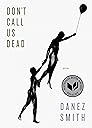
Don't Call Us Dead: Poems
Product ID: 46315939
Desertcart purchases this item on your behalf and handles shipping, customs, and support to KSA.
Finalist for the National Book Award for Poetry Winner of the Forward Prize for Best Collection “[Smith's] poems are enriched to the point of volatility, but they pay out, often, in sudden joy.”― The New Yorker Award-winning poet Danez Smith is a groundbreaking force, celebrated for deft lyrics, urgent subjects, and performative power. Don’t Call Us Dead opens with a heartrending sequence that imagines an afterlife for black men shot by police, a place where suspicion, violence, and grief are forgotten and replaced with the safety, love, and longevity they deserved here on earth. Smith turns then to desire, mortality―the dangers experienced in skin and body and blood―and a diagnosis of HIV positive. “Some of us are killed / in pieces,” Smith writes, “some of us all at once.” Don’t Call Us Dead is an astonishing and ambitious collection, one that confronts, praises, and rebukes America―“Dear White America”―where every day is too often a funeral and not often enough a miracle. Review: A Poetry Rollercoaster - These poems embrace topics that most avoid discussing around dinner tables or campfires because it makes them uncomfortable. Hard hitting and intense, Danez Smith's "Don't Call Us Dead" is all about police brutality, America, gay men, sex, life and death, and HIV. Here, he creates a world where blacks can live again with no fear, no pain or suffering. The very first poem of the book starts us off with that. For example, Smith says, "Theres no language for officer or law" and "we go out for sweets and come back." That being said, Smith talks about politics, but it isn't a tiring political debate. The reader knows exactly where they stand with their views, but his rhetoric isn’t hateful(although it may come across that way to readers looking from the outside in. Smith shares their opinion about our president without using his name and says he's a man who has "no words / & hair beyond simile." He talks about gun violence and does a poem partly in the POV of a policemen. For example it starts with, "dear ghost I made/I was raised with a healthy fear of the dark" and continues with "I got sca... I was just doing my job." Later, the same poem is the point of view of a black man. Smith shares his opinion and experience on being a man who's HIV positive, but also mixes that topic with others like gun violence and politics within the same breath. Examples: "some of us are killed / in pieces, some of us all at once” and “do you think someone created AIDS? / maybe. i don't doubt that / anything is possible in a place / where you can burn a body / with less outrage than a flag.” Smith is even informative. They gives readers a statistic from the CDC that states 1 in 2 black men who have gay sex will get HIV. Insanity! The subject matter often intertwines with the motif: Nature. The running theme for this author is nature. They are often comparing things to forests, roots, skies, oceans, dirt ect. Smith's imagery is powerful. For example, the lines "how your blood / smells like a hospital, graveyard / or morgue left in the sun" made my nose wrinkle and my lip curl in disgust. Smith's vocabulary is kept simple for the most part. There isn’t big fancy words thrown in just to make the poems seem intelligent, pretty or fancy. No need to run and scramble to Google search a word. The poem isn’t pretty because the topics aren't pretty. The choice of making all “I's" lower case is an interesting choice. That speaks volumes in itself about how the author may feel. The author plays with line spacing quite a bit. Their line breaks make sense and leave the reader often surprised at what comes next or in suspense as their eyes scurry to get to the next line. The most experimentation and line spacing would be pages 51 and 52 with the mixing of phrases of "my blood" and "his blood." It also breaks up the monotony of line reading and just gives the readers a picture to observe. Overall, it’s great. Not to be read in a single sitting, but meant to be taken in, digested and then reread for more information. The book isn't all doom and gloom, there are poems that have happier notes. This book is good for people who are just getting into poetry because its modern, it taps into things that can be understood by recent /current generations. Review: Captivating and Thought-Provoking: A Perfect Bus Ride Companion - From the moment you turn the first page of "Don't Call Us Dead: Poems", you are transported into a world of intricate emotions and profound contemplation. This collection of poems by Danez Smith masterfully paints poignant pictures of the world we inhabit, as seen through the lens of diverse experiences. The beauty of "Don't Call Us Dead: Poems" is that it's designed to be digested in small doses, making it an excellent companion for daily commuting. Each poem stands on its own, yet together, they form a tapestry of thought-provoking perspectives that leave a lasting impact long after the bus ride ends. Despite its brevity, the book's content is powerful and leaves you yearning for more. Smith's words resonate with a raw and authentic emotional depth that speaks to the reader on a personal level. The poems' themes are universal yet personal, making every bus ride an introspective journey. Ratings: Readability: 8/10 Emotional Impact: 9/10 Commute Companion: 10/10 Depth of Content: 7/10 Overall: 8/10 - An enlightening and emotional journey that transforms daily commuting into an opportunity for introspection and personal growth. Don't just ride the bus, take a journey with "Don't Call Us Dead: Poems".
| Best Sellers Rank | #101,498 in Books ( See Top 100 in Books ) #45 in Black & African American Poetry (Books) #49 in LGBTQ+ Poetry (Books) |
| Customer Reviews | 4.7 out of 5 stars 779 Reviews |
S**.
A Poetry Rollercoaster
These poems embrace topics that most avoid discussing around dinner tables or campfires because it makes them uncomfortable. Hard hitting and intense, Danez Smith's "Don't Call Us Dead" is all about police brutality, America, gay men, sex, life and death, and HIV. Here, he creates a world where blacks can live again with no fear, no pain or suffering. The very first poem of the book starts us off with that. For example, Smith says, "Theres no language for officer or law" and "we go out for sweets and come back." That being said, Smith talks about politics, but it isn't a tiring political debate. The reader knows exactly where they stand with their views, but his rhetoric isn’t hateful(although it may come across that way to readers looking from the outside in. Smith shares their opinion about our president without using his name and says he's a man who has "no words / & hair beyond simile." He talks about gun violence and does a poem partly in the POV of a policemen. For example it starts with, "dear ghost I made/I was raised with a healthy fear of the dark" and continues with "I got sca... I was just doing my job." Later, the same poem is the point of view of a black man. Smith shares his opinion and experience on being a man who's HIV positive, but also mixes that topic with others like gun violence and politics within the same breath. Examples: "some of us are killed / in pieces, some of us all at once” and “do you think someone created AIDS? / maybe. i don't doubt that / anything is possible in a place / where you can burn a body / with less outrage than a flag.” Smith is even informative. They gives readers a statistic from the CDC that states 1 in 2 black men who have gay sex will get HIV. Insanity! The subject matter often intertwines with the motif: Nature. The running theme for this author is nature. They are often comparing things to forests, roots, skies, oceans, dirt ect. Smith's imagery is powerful. For example, the lines "how your blood / smells like a hospital, graveyard / or morgue left in the sun" made my nose wrinkle and my lip curl in disgust. Smith's vocabulary is kept simple for the most part. There isn’t big fancy words thrown in just to make the poems seem intelligent, pretty or fancy. No need to run and scramble to Google search a word. The poem isn’t pretty because the topics aren't pretty. The choice of making all “I's" lower case is an interesting choice. That speaks volumes in itself about how the author may feel. The author plays with line spacing quite a bit. Their line breaks make sense and leave the reader often surprised at what comes next or in suspense as their eyes scurry to get to the next line. The most experimentation and line spacing would be pages 51 and 52 with the mixing of phrases of "my blood" and "his blood." It also breaks up the monotony of line reading and just gives the readers a picture to observe. Overall, it’s great. Not to be read in a single sitting, but meant to be taken in, digested and then reread for more information. The book isn't all doom and gloom, there are poems that have happier notes. This book is good for people who are just getting into poetry because its modern, it taps into things that can be understood by recent /current generations.
A**N
Captivating and Thought-Provoking: A Perfect Bus Ride Companion
From the moment you turn the first page of "Don't Call Us Dead: Poems", you are transported into a world of intricate emotions and profound contemplation. This collection of poems by Danez Smith masterfully paints poignant pictures of the world we inhabit, as seen through the lens of diverse experiences. The beauty of "Don't Call Us Dead: Poems" is that it's designed to be digested in small doses, making it an excellent companion for daily commuting. Each poem stands on its own, yet together, they form a tapestry of thought-provoking perspectives that leave a lasting impact long after the bus ride ends. Despite its brevity, the book's content is powerful and leaves you yearning for more. Smith's words resonate with a raw and authentic emotional depth that speaks to the reader on a personal level. The poems' themes are universal yet personal, making every bus ride an introspective journey. Ratings: Readability: 8/10 Emotional Impact: 9/10 Commute Companion: 10/10 Depth of Content: 7/10 Overall: 8/10 - An enlightening and emotional journey that transforms daily commuting into an opportunity for introspection and personal growth. Don't just ride the bus, take a journey with "Don't Call Us Dead: Poems".
W**H
A Poet Reporting From the Front Lines
There is some truly powerful poetry in this collection, and I highlight the opening sequence as being particularly striking. Smith has a nimble control of the language. He communicates experience as if he is reporting from the front line, and well, he is. You can definitely see the spoken word circuit's influence on his writing, and this is not a bad thing. My only critique would be that because many of the poems in the collection have that spoken word influence, they don't really reward second reading. And occasionally, just occasionally, you get the sense that he has found his schtick, and is going to stay with it. This is much more apparent in his next collection, "Homie".
D**O
Fierce and beautiful poems
This is an amazing book--heartrending and beautifully crafted and important. I got the book from the library first, sat down and read those opening poems (which features some of the many young black men killed by police), and before I knew it, I was in tears. These poems are not easy to read. They are accessible I think, in terms of language and style, which is something I appreciate in poetry, but the content is difficult. I slowed down. I read the books in bits and pieces, and when I was done, I promptly ordered a copy for myself, and then ordered the book for the graduate poetry class I am teaching. Smith's voice is so important, and these poems render the reality that too many young black men, young gay men, face: a history of opression and violence. And yet, there is so much beauty here too. I read a lot of poetry. I'm a poet, and I teach poetry in an MFA program. I read a lot of books that get a lot of hype too. But it has been years since I have been so moved by the beauty, strength and importance of a book. I'm telling everyone I know to read this book. Just read it.
M**Y
A Piercing Exploration of Life, Loss, and Resilience
In Don't Call Us Dead, Danez Smith fearlessly navigates themes of identity, injustice, and the complexities of existence with raw intensity. The collection opens with a poignant imagining of an afterlife for black men slain by police, weaving through landscapes of desire, mortality, and the HIV-positive experience. Smith's poetic prowess shines through powerful imagery and unflinching honesty, crafting verses that are both haunting and hopeful. This book is a vital testament to the resilience of the human spirit amidst adversity.
D**.
Poetry that's on the pulse. Hard Hitting, yet beautiful
Beautiful. Brutal. Truth. This was an amazing book of poetry. I don’t read enough poetry, but this one was lyrical and hard hitting. It was difficult to read but it is so timely. I would suggest it to anyone wanting to open their minds and hearts to what it’s like to not only be a black man in America but a queer man as well. Heart wrenching and on the pulse.
R**N
Absolutely devastating
These poems ripped me apart. Smith write with such power, it was such a gift to read these incredible poems. A must read.
K**N
Amazing.
I had never heard of Danez Smith or his poetry. This book showed up as a recommendation. I was buying a bunch of other books so I thought, why not? What an incredible discovery! I now plan on buying anything he publishes. I'm going to be completely candid. Anytime I see a story about an African-American getting shot by a police officer, I feel terrible but it doesn't feel personal. There is a persistent feeling of helplessness because I can't do anything about it and frustration in the knowledge that, if it doesn't stop soon, it'll get much worse. That being said, as a white person, I only really feel sympathetic as an outsider and relieved that I'm not in their shoes. I don't know how else to feel and I'm ashamed to admit, after the public outcry dies down, I move on with my privileged life as though nothing happened. While reading the first poem in this book, "summer, somewhere," I felt, for the first time, that I understood, as much as I could, the weight that is on the shoulders of an entire race of people in this country. I'm only slightly embarrassed to say that I cried while reading several of the poems. I've been a fan of poetry for most of my life. I've read all the greats - Keats, Frost, Yeats, Whitman, Dickinson, Eliot - and I have never cried. Not once before now. "Don't Call Us Dead" is incredible. I would recommend it to anyone.
L**O
Emocionante.
Danez é um Shakespeare moderno. Maravilhoso.Os assuntos são tratados aqui com muita abertura e sinceridade. Vale o tempo e a leitura.
A**R
and she LOVED it. It also came a few days early ...
I bought it as a surprise present for a young, black poet (my kid sister), and she LOVED it. It also came a few days early which was great.
S**A
Black voice
Brilliant writing with new form of poetry. Perfectly reflects the dark conscience of society. Good read for any avid reader.
B**V
Beautiful. Painful
Incredible. Beautiful. Painful. Breath-taking. Heart -breaking. Poetry has to be really something special and evoke very strong feelings and images for me to have a positive reaction to it - and the impact made by Danez Smith in this collection was intense. I'm left feeling somewhat masochistic in a sense....in that I could compare my emotional state on finishing reading this book as similar to feeling grateful for being run over by a truck. I'm shaken and I'm tearful, yet I'm now looking for earlier work to buy and then returning to the beginning of 'Don't Call Us Dead' in order to go through again - aloud, to anyone who will listen.
J**A
Absolutely amazing!!!
A must have for any poetry collection. There are many dark topics in this book however it does not leave you feeling depressed. I started reading this book and I couldn't put it down until I finished it.
Trustpilot
1 week ago
1 week ago