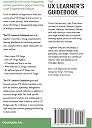

Answers to the most frequently asked questions about learning UX DesignIt can be difficult for beginners or those just curious about UX Design to find out how or where to start learning. Most information about UX Design is disorganized, fragmented, or lacking in actual details. The UX Learner’s Guidebook ties it all together to provide a strong, comprehensive learning foundation by combining practical, clear examples with in-depth explanations on topics such as:• How to learn UX Design• How UX Design happens• UX methods and how to use them• What makes up UX Design competency• The different types of UX Design jobs• How to find and land a job in UX Design The UX Learner’s Guidebook goes well beyond common UX advice, touching on the need for research, diplomacy, management, collaboration, and self-reflection in addition to technical design skills. This book lays the groundwork for students and professionals to better understand what it takes to excel at UX Design, gain the confidence to start practicing right away, and continue growing and learning in their careers. Review: A non-academic book based on real experience - Two confessions upfront: 1) I don’t write reviews very often, but when I do, I mean what I say. 2) Chad Camara and Yujia Zhao, the authors of this book, were graduate students of mine — among the best ones. So I may be a bit favorably biased in my review. Nevertheless, it’s a wonderful book and here’s why: Many UX books recommended to beginners fail to help them build a solid learning foundation. They are either too intellectually deep for a beginner to fully grasp, or so narrow in their scope that they paint an overly-simplistic picture of what it takes to do UX Design. This book aims in the middle, where the authors pull from their varied experiences to provide a broad survey of the field while tackling the basic concerns that any UX designer may have (or should have) about how to become a successful professional, including the people skills.. A key theme of the book is that it takes a lot more than just technical design skills and tool knowledge to excel as a UX Designer. It takes a lot of practice in a variety of contexts. But if you don’t practice the important core skills, you’ll learn how to design and build the product right versus the more desirable goal to design and build the right product. If you can afford to get a serious graduate education at a top design program, do that. But if you’re already employed and find yourself working with designers or doing design work yourself, this little book is a great resource. (And if you do find yourself in graduate school, take this book with you; it will help you identify the important parts of the curriculum!) Review: Practical guide - This book is a must for practical how-to information about UX.
| Best Sellers Rank | #6,471,493 in Books ( See Top 100 in Books ) #1,326 in User Experience & Website Usability #1,745 in Industrial & Product Design |
| Customer Reviews | 4.5 out of 5 stars 37 Reviews |
M**L
A non-academic book based on real experience
Two confessions upfront: 1) I don’t write reviews very often, but when I do, I mean what I say. 2) Chad Camara and Yujia Zhao, the authors of this book, were graduate students of mine — among the best ones. So I may be a bit favorably biased in my review. Nevertheless, it’s a wonderful book and here’s why: Many UX books recommended to beginners fail to help them build a solid learning foundation. They are either too intellectually deep for a beginner to fully grasp, or so narrow in their scope that they paint an overly-simplistic picture of what it takes to do UX Design. This book aims in the middle, where the authors pull from their varied experiences to provide a broad survey of the field while tackling the basic concerns that any UX designer may have (or should have) about how to become a successful professional, including the people skills.. A key theme of the book is that it takes a lot more than just technical design skills and tool knowledge to excel as a UX Designer. It takes a lot of practice in a variety of contexts. But if you don’t practice the important core skills, you’ll learn how to design and build the product right versus the more desirable goal to design and build the right product. If you can afford to get a serious graduate education at a top design program, do that. But if you’re already employed and find yourself working with designers or doing design work yourself, this little book is a great resource. (And if you do find yourself in graduate school, take this book with you; it will help you identify the important parts of the curriculum!)
R**A
Practical guide
This book is a must for practical how-to information about UX.
T**E
Great way for burgeoning designers to learn how to position themselves
This book is helpful for newly graduated design students preparing to work in the industry as well as people currently in the industry looking to shore up their design skills and understanding the user experience. You don't have to be a designer to get a lot out of this book, and it provides great insight into the way designers approach problems and opportunities and how you can work better with them. Your first jobs as a designer can really shape your skill set and the way you interpret your role, as, at the moment at least, design jobs are extremely varied in their tasks, tools, function, and responsibility. This book has lots of great advice that makes sure you're able to position yourself to grow into the role you want to have. Wish I had had this book right around the time I was graduating...
D**A
Clear and concise
I'm considering changing careers and this book clearly laid out the fundamentals of UX Design and how to go about landing a job. Overall, it provides a road map of how to learn more in depth for each of the various areas UX spans. Highly recommended.
V**N
Informative and enjoyable
As an introduction and an idea of what UX is about, this book is very good. Business Analysts will enjoy this book as there is some overlap between the two disciplines.
E**N
This is an excellent collection of thoughts and advice for aspiring UX designers
This is an excellent collection of thoughts and advice for aspiring UX designers. The book is composed around the very basic concerns that any UX designer may he about how to become a successful professional. The authors focus on serious questions but deals with them in an simple and elegant way that makes the text easy to read and possible to engage in even for beginners in the field. The authors combine insightful knowledge about UX competence with professional advice on how to plan and strategize a UX career. This is a book that anyone who contemplates a career in UX should read.
J**L
Awesome
Amazing look at the overall field of UX Design. This book will help you get started, and help you advance. Give it a chance and give it a read.
D**G
Four Stars
good beginner book for someone who has no frame of reference, but is interested in the field.
E**Z
Five Stars
Exactly the question and answers I was looking for as a non-tech ux beginner
A**N
Très bonne introduction
Cet ouvrage est très court, il ne rentre pas les détails mais il ne s'agit pas du but. "UX" est un mot à la mode, utilisé pour tout et n'importe quoi, ce livre repose les bases et définit le terme, définit les compétences nécessaires et le coeur de métier du designer UX. Il ne rentre pas dans les détails des méthodes, d'autres ouvrages (comme le très bon "Méthodes de design UX") rentrent beaucoup plus en profondeur.
Trustpilot
2 months ago
2 weeks ago