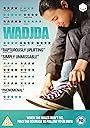
![Wadjda [DVD] [2012]](https://m.media-amazon.com/images/I/81EdeySltTL._AC_SL3840_.jpg)
Buy anything from 5,000+ international stores. One checkout price. No surprise fees. Join 2M+ shoppers on Desertcart.
Desertcart purchases this item on your behalf and handles shipping, customs, and support to KSA.
A rebellious Saudi Arabian girl hatches a plan to get her hands on the bicycle she craves in this coming-of-age story from first time director Haifaa Al-Mansour. Living within a conservative suburb of Riyadh, fun-loving eleven-year-old Wadjda (Waad Mohammed) has her heart set on a green bicycle so that she can beat the boys in their neighbourhood races. But when her mother (Reem Abdullah) forbids it, anticipating a reaction from a society that disapproves of women riding bicycles, an enterprising Wadjda decides to raise the money herself by entering a local Qur'an-reading competition that offers a cash prize. Review: Mobility, multidimensional, in “The Magic Kingdom”… - …where some dreams can still come true. Haifaa al-Mansour is from a town in the Saudi heartland, Al Zulfi. The town was the site of the Battle of Sabilla, in 1929, when Ibn Saud decisively crushed the forces of the Ikhwan. But it is the setting of Zulfi that I most remember, one of the loveliest in all Saudi Arabia, with the green oasis set against the mountains and the sands of the Al-Dahna, the strip of desert that connects the Nafud desert with the Rub Al-Khali. And I’d like to think that this beautiful setting inspired Ms. Al-Mansour to become Saudi Arabia’s first and most prominent female film director. “Wadjda” is her first feature length movie, released in 2013. It involves the straightforward aspirations of a 10-year old girl: if boys can ride and own bikes, then, why can’t I? Most places in the world this aspiration is readily fulfilled, but this is Saudi Arabia, where women (famously) cannot drive a car. And this is also a very real portion of Saudi Arabia not often featured in the media: the 10-year old girl, Wadjda, is from a lower middle-class family – hardly poor and deprived – but also where 800 SR (approximately $225), the purchase price for the bike, is not readily available. Men are deep in the background, playing supporting roles. The three principle characters are all women, with Wadjda being played by Waad Mohammed, her mother is played by Reem Abdullah, and the school principal, Ms. Hussa, played by Adh Kamel. In terms of “mobility,” it is important to realize that as recently as 2003, Saudi women were not allowed to appear in popular Saudi programs such as “Tash ma Tash.” They had to import Jordanian, Egyptian or Bahraini women for the female roles. Reem Abdullah is a Saudi, who commenced her career on “Tash ma Tash” in 2007. Adh Kamel is from Jeddah, the more liberal town in the Kingdom, and thus without the Nadji background, and was still able to play the evil school principal – the “enforcer” of morality – brilliantly. Kudos. The movie is filmed in Riyadh, a city whose population has grown at least 20 times in a single lifetime. But its “signature” skyscrapers, nor any other prominent feature, are ever shown. Rather, it is filmed in one of the endless non-descript neighborhoods in the suburban sprawl, where construction is still much in evidence. Aside from Wadjda’s central aspiration, other issues that are reflective of Saudi women’s concerns are included: will my husband take a second wife, particularly if I cannot produce a boy?; the hassles with drivers; should I take a job (like in a hospital) where I will have to interact with males that I am not related to?; youthful, arranged marriages; and lesbianism. Wadjda realizes that the only way she will be able to obtain the money for her bike is to join the Religious Club, participate in the Koran memorization contest, and win the top prize of 1000 SR. The movie makes it clear that at the beginning Wadjda knew very little about the Koran. In the finals, the evil school principal, whose heart may be softening a bit towards her “convert,” chose, ironically Verse 7 of the Sur’at al-Bakara for the recitation. “Great is the penalty they will incur…” in reference to those who falsely claim their allegiance to Allah. Al-Mansour also adds a nice touch by including the suggestion that the principal, Ms. Hussa might be less than pure herself, and even “getting a little on the side.” And the music is so well-done by Max Richter. The major problem I had with the film: where are all the cars?! Riyadh is one of the least bike-friendly cities on earth. I should know. I love to ride a bike. About two decades ago I, along with a small group of Western guys, would attempt bike rides early on Friday mornings, when the traffic is the least. That lasted about a month. We concluded it was simply too dangerous. Just too many “crazy drivers” out there. And that was not well-depicted in the film. Personally, I’d be on the side of squashing Wadjda’s aspiration, not because she is female, but because no one, male or female, for their safety, should be riding a bike in Riyadh! Still, “with a suspension of disbelief on the safety issue,” this is a great, 5-star, well-produced, Saudi film… and I would love a comment that would indicate I have not kept up with modern times, and there are now specially dedicated bike routes – well separated from motorized vehicles -that can be used in Riyadh, by both sexes! Review: Wadjda -- a delightful and insightful film about a girl in Saudi Arabia - This was a wonderful film about a girl in Saudi Arabia trying to exert her own identity within the constraints of her culture and religion. One of the things I loved about this film is that it was not preachy about the rights or wrongs about a religion -- it was a story of a girl and it was told without being judgmental. Wadjda could have been a girl anywhere in the world and her story could have been any girl's story about testing the boundaries, being confused about constraints because of gender, and feeling all the joys and frustrations that come with finding your place in the world. There was just enough humor and heartfelt emotion to make this a great movie, and it is even more amazing that the entire film was shot in Saudi Arabia. I loved this girl and found myself cheering her on as I would cheer on all girls who don't quit fit the gender-based roles all cultures have for girls in one form or another (or boys for that matter). There are so many women and girls all around the world who will easily identify with Wadjda.
| ASIN | B00GDEZKZC |
| Aspect Ratio | 1.78:1 |
| Best Sellers Rank | #123,538 in Movies & TV ( See Top 100 in Movies & TV ) #87,746 in DVD |
| Customer Reviews | 4.5 4.5 out of 5 stars (593) |
| Item model number | 5060238039598 |
| Media Format | PAL |
| Number of discs | 1 |
| Product Dimensions | 7.48 x 5.31 x 0.55 inches; 0.01 ounces |
| Release date | February 3, 2014 |
| Run time | 1 hour and 37 minutes |
| Studio | Soda Pictures |
| Subtitles: | English, English |
J**I
Mobility, multidimensional, in “The Magic Kingdom”…
…where some dreams can still come true. Haifaa al-Mansour is from a town in the Saudi heartland, Al Zulfi. The town was the site of the Battle of Sabilla, in 1929, when Ibn Saud decisively crushed the forces of the Ikhwan. But it is the setting of Zulfi that I most remember, one of the loveliest in all Saudi Arabia, with the green oasis set against the mountains and the sands of the Al-Dahna, the strip of desert that connects the Nafud desert with the Rub Al-Khali. And I’d like to think that this beautiful setting inspired Ms. Al-Mansour to become Saudi Arabia’s first and most prominent female film director. “Wadjda” is her first feature length movie, released in 2013. It involves the straightforward aspirations of a 10-year old girl: if boys can ride and own bikes, then, why can’t I? Most places in the world this aspiration is readily fulfilled, but this is Saudi Arabia, where women (famously) cannot drive a car. And this is also a very real portion of Saudi Arabia not often featured in the media: the 10-year old girl, Wadjda, is from a lower middle-class family – hardly poor and deprived – but also where 800 SR (approximately $225), the purchase price for the bike, is not readily available. Men are deep in the background, playing supporting roles. The three principle characters are all women, with Wadjda being played by Waad Mohammed, her mother is played by Reem Abdullah, and the school principal, Ms. Hussa, played by Adh Kamel. In terms of “mobility,” it is important to realize that as recently as 2003, Saudi women were not allowed to appear in popular Saudi programs such as “Tash ma Tash.” They had to import Jordanian, Egyptian or Bahraini women for the female roles. Reem Abdullah is a Saudi, who commenced her career on “Tash ma Tash” in 2007. Adh Kamel is from Jeddah, the more liberal town in the Kingdom, and thus without the Nadji background, and was still able to play the evil school principal – the “enforcer” of morality – brilliantly. Kudos. The movie is filmed in Riyadh, a city whose population has grown at least 20 times in a single lifetime. But its “signature” skyscrapers, nor any other prominent feature, are ever shown. Rather, it is filmed in one of the endless non-descript neighborhoods in the suburban sprawl, where construction is still much in evidence. Aside from Wadjda’s central aspiration, other issues that are reflective of Saudi women’s concerns are included: will my husband take a second wife, particularly if I cannot produce a boy?; the hassles with drivers; should I take a job (like in a hospital) where I will have to interact with males that I am not related to?; youthful, arranged marriages; and lesbianism. Wadjda realizes that the only way she will be able to obtain the money for her bike is to join the Religious Club, participate in the Koran memorization contest, and win the top prize of 1000 SR. The movie makes it clear that at the beginning Wadjda knew very little about the Koran. In the finals, the evil school principal, whose heart may be softening a bit towards her “convert,” chose, ironically Verse 7 of the Sur’at al-Bakara for the recitation. “Great is the penalty they will incur…” in reference to those who falsely claim their allegiance to Allah. Al-Mansour also adds a nice touch by including the suggestion that the principal, Ms. Hussa might be less than pure herself, and even “getting a little on the side.” And the music is so well-done by Max Richter. The major problem I had with the film: where are all the cars?! Riyadh is one of the least bike-friendly cities on earth. I should know. I love to ride a bike. About two decades ago I, along with a small group of Western guys, would attempt bike rides early on Friday mornings, when the traffic is the least. That lasted about a month. We concluded it was simply too dangerous. Just too many “crazy drivers” out there. And that was not well-depicted in the film. Personally, I’d be on the side of squashing Wadjda’s aspiration, not because she is female, but because no one, male or female, for their safety, should be riding a bike in Riyadh! Still, “with a suspension of disbelief on the safety issue,” this is a great, 5-star, well-produced, Saudi film… and I would love a comment that would indicate I have not kept up with modern times, and there are now specially dedicated bike routes – well separated from motorized vehicles -that can be used in Riyadh, by both sexes!
C**L
Wadjda -- a delightful and insightful film about a girl in Saudi Arabia
This was a wonderful film about a girl in Saudi Arabia trying to exert her own identity within the constraints of her culture and religion. One of the things I loved about this film is that it was not preachy about the rights or wrongs about a religion -- it was a story of a girl and it was told without being judgmental. Wadjda could have been a girl anywhere in the world and her story could have been any girl's story about testing the boundaries, being confused about constraints because of gender, and feeling all the joys and frustrations that come with finding your place in the world. There was just enough humor and heartfelt emotion to make this a great movie, and it is even more amazing that the entire film was shot in Saudi Arabia. I loved this girl and found myself cheering her on as I would cheer on all girls who don't quit fit the gender-based roles all cultures have for girls in one form or another (or boys for that matter). There are so many women and girls all around the world who will easily identify with Wadjda.
A**E
A film everyone in the world should see.
This is the first film made in Saudi Arabia and the first ever made by a woman as well. I'm so grateful for her little masterpiece--her story which carries so much potential impact in bringing awareness to the reality of women in Saudi Arabia. This film doesn't focus on the most brutal aspects of the kingdom but in telling a quieter story and one that has points of real intersection for others in the world to connect with makes it especially powerful. It's a compelling piece of work, it's a very important film, and it's quite a display of talent as a cinematic work of art. Watch it.
J**L
Really good movie
Delightful story of the determination of a young Saudi girl in a society that is oppressive for women. Though the realities for women are difficult for us to imagine in the US, the film does a good job of relaying those facts without bringing the viewer totally down. This film was on my watch list for too long and thus, I had to "buy it" instead of renting it (Bummer--don't know why Amazon can't keep renting the movies...) but my 22 YO son wanted to see it also so I sprang for the purchase. He enjoyed it equally.
P**D
A nice and lovely movie for all your family, incredible but real, this is the first real and complete movie filmed entirely in Saudi Arabia where we learn the friendship between a beautiful young girl and a young boy in an ultra-conservative society where the women have no rights, if you are a little bit curious with an open mind on different cultures so this movie is perfect for you or else, abstain !!! Me, on my side I learned a lot of things with this movie and thats why I loved it very much !!!
L**N
Das Mädchen Wadjda - ein außergewöhnlicher Film - Information über die Geschlechterrollen in saudiarabien auf sehr anrührende und unterhaltsame Weise angeboten - unbedingt anschauen!
J**Y
I first saw this film when it first came out and then only because it was scheduled on my shift. But I was so glad I saw it. Culture is a difficult subject to describe / understand but this film gives a genuine and non-judgemental insight into life in Saudi Arabia. The fact that the film has such a talented and endearing cast is a bonus. The young girl, who is the focus of the film, is very natural in her role, the co-stars are also well up to their task of creating a scenario that is both realistic and problematic in a country that is not keen on any sort of female empowerment. This is definitely a "feel-good factor" film, you will come out smiling, guaranteed. There are political aspects to the making of this film that have been well publicised but the finished result is both charming and endearing. Excellent.
P**E
Esta es una de esas películas independientes de bajo presupuesto que merecen una audiencia mucho mayor de lo que va a conseguir. Es una cuento encantador de una joven chica saudi que niega conformarse con el comportamiento esperado de las chicas. El aspecto más asombroso es que la directora, Haifaa Al Mansour, rodó todo la película en Arabia Saudita misma. Por los ojos occidentales - bueno, los míos de todos modos - la manera en que las mujeres de ese país deben vestirse y comportarse es lo más lejano posible de nuestro concepto de la igualdad, y a lo mejor nuestra joven heroína y su sueño de poseer una bici representan una suave corriente rebelde que la directora no podría haber tratado más abiertamente. Siendo femenino no le hizó más fácil la tarea - las mujeres no deberían trabajar junto con los hombres, y sobre todo con la cara descubierta. En suma una peli valiente y brillante. La calidad del DVD es excellente. This is one of those low-budget independent films that deserves a much wider audience than it's likely to get. It's a delightful story about a young Saudi girl who refuses to conform with the behaviour expected of young girls. The most astonishing aspect is that the film's director, Haifaa Al Mansour, shot the whole film on location in Saudi Arabia itself. To Western eyes - well, mine anyway - the way women in that country are expected to dress and behave is about as far from our concept of equality as it's possible to get, and perhaps our young heroine and her dream of owning a bike represent an undercurrent of quiet rebellion that the director would not have been allowed to portray more directly. Being female herself didn't make her task any easier - women are not supposed to work alongside men, and certainly not with their faces uncovered. Altogether a brave and brilliant little film. The DVD quality is excellent.
A**E
sans lourdeur, sans commentaire l'auteur nous fait partager le quotidien de cette petite fille délurée qui veut simplement vivre comme tous les enfants : avoir une bicyclette, pouvoir se promener à vélo. c'est l'occasion de nous faire entrevoir le poids d'un société où, derrière le voile et la morale de façade rudement imposée, les choses ne sont pas si simples. Pour l'extraordinaire actrice qui joue son propre rôle à merveille, pour le sourire du petit garçon amoureux de Wadjda qui ne voit pas le mal qu'il y aurait à la laisser grandir libre comme les garçons, pour tout ce que nous dit ce film sur la vie quotidienne de celles que nos politiques occidentaux ne défendent pas, et, tout simplement parce que ce film est un petit bijou roboratif et malicieux, il faut voir le film de la courageuse Waad Mohammed
Trustpilot
1 week ago
2 weeks ago