

Call Me by Your Name: A Novel
Product ID: 100410035
🌅Set in idyllic Italian Riviera
🎬Oscar-winning film adaptation
📚Bestselling literary classic
Desertcart purchases this item on your behalf and handles shipping, customs, and support to KSA.
📖 Unlock the summer romance that redefined a generation’s heart and soul.
Call Me by Your Name is a bestselling, critically acclaimed novel by André Aciman, celebrated for its poetic exploration of a transformative summer romance on the Italian Riviera. The story inspired an Oscar-winning film and has earned multiple literary awards, making it a must-read for lovers of profound, intimate storytelling.
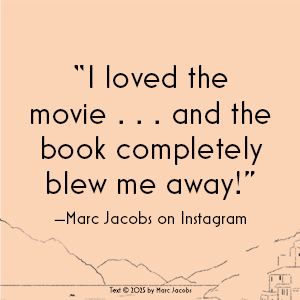
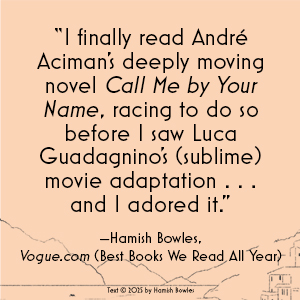
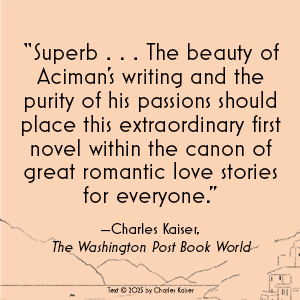
| Best Sellers Rank | 453,471 in Books ( See Top 100 in Books ) 1,389 in Literary Fiction (Books) 2,650 in Contemporary Fiction (Books) 9,153 in Contemporary Romance (Books) |
| Customer Reviews | 4.4 out of 5 stars 43,625 Reviews |
T**S
cor cordium...heart of hearts
This book broke my heart! I feel it's important to say that before anything else, because I don't want to give you the wrong impression; that this is some kind of fluffy tale of a forbidden holiday romance. That would cheapen it, and despite the occasional sex scenes which might put off a few sensitive readers, this is a story not cheap in any way, shape or form. Call Me By Your Name is, quite simply, one of the most beautiful things I have ever read (probably the most beautiful, second only to Lolita). It is the story of a passionate, intimate and eternal - yet doomed - love between a boy named Elio and his father's house guest, Oliver, and the incredible connection that grows between them over the summer, and culminates in a tragically all-too-brief stay in Rome. The boys grow into men but their friendship, and complete and total yearning for each other, continues to draw them together even as life draws them apart... I'll confess it took me a while to get into this story; lack of dialogue tagging made it hard for me to know who was speaking, and Elio's narrative voice sometimes gets carried away on boring tangents - he's a little too high-brow to be believeable as a 17 year old. But at the same time the innocent, desperate boy's prose, imagery, and obsessive fantasies about the carefree Oliver (which he gradually comes to realise are not as pathetically one-sided as he thought!) are mesmeric, and only a few chapters in I found myself hypnotised by the sights, sounds and smells of the mediterranean, as if I'd been sucked right into Elio and Oliver's beautiful world. As I say, there is a lot of infuriating back and forth, lazy days and 'will they won't they' going on in the beginning, but don't let it put you off, because it's all an effective, agonising build up to when they finally do get together. However...like Cathy and Heathcliff of Wuthering Heights, the characters in this book suffer from major 'bang their heads together' syndrome. It's infuriating, and I often wanted to scream 'WHY? WHY DON'T YOU JUST BE TOGETHER???!!! ARGH!!' Honestly, it's incredible how much effect this book had on me. The image of Elio and Oliver's kiss in Rome will be forever burned into my imagination as though I was right there with them, and one bit of the book right near the end when Elio is wishing that he could tell Oliver something and just can't...wow, that bit made me put down the book for a moment and just burst into tears. I literally could not stop sobbing for about five minutes - I cannot remember the last time any book made me cry that hard!! (Apart from when Dobby died in Harry Potter, but that's a story for another day...) Call Me By Your Name is both a celebration and a eulogy, and even though it leaves you with a bittersweet ache inside, it also leaves you with the memories of one of the most enduring love stories ever written. Beautiful and heartrending, this is utter class and will stay with me until my dying day. I hope that, one long hot summer in the distant future, I might be brave enough to grab some tissues, curl up, and let Elio and Oliver take me back to Monet's Berm with them.
R**N
The defining summer of his life
This is one of the great love stories. It evokes the longings, the sublimities, the pangs of first love with a poetic transcendence that only the finest writers can achieve. You usually have to go back to the classics, to Goethe and Turgenev, to find such delicate angst, such aching tenderness, to experience such an intense sense of intimacy and loss. There have been many coming of age stories, particularly those that feature the transformative experience of first gay love, some very good, but I cannot recall any as good as this one. It's a literary novel, scrupulous, poetic and analytic in its sensuous handling of language; it gets under the skins of its two main characters, to explore the multiplicity of meanings found in gestures, expressions, conversations, incidents, feelings. It is Proustian: the author, analysing through the eyes of a narrator looking back at his youthful self from the vantage of years and wisdom - just as Marcel did in Proust's great novel - immerses himself once more in the myriad signs of desire, love and loss. Elio, seventeen, a gifted musician, highly intelligent and literate, exceptional in many ways, meets at his parent's Italian coastal villa, Oliver, a handsome twenty-four year old, a student of his father; he is working on a book about Herodotus. Oliver has come to stay for the summer: the weather is perfect, the villa and its surroundings idyllic, the household full of civilised, liberal minded people and servants: this is the ideal setting for a summer romance, and Aciman evokes it with the skill of a subtle painter. At first, as Elio desires Oliver, trying to hide it, even from himself, but giving himself away in so many awkward ways, it is a novel of unrequited love, and everyone who has ever felt unspoken desire of this intensity knows what contortions the soul has to go through, balanced between lust and denial. At first Oliver is ambiguous in his response to the boy; he leads a life off-stage that adds to his allure, his mystery, his apparent unattainabilty, but there are signs that he's interested, signs that are highly erotic. And then the breakthrough, the souls bared, the physical intimacy, the other-worldly happiness, the sense of two ardent, exceptional beings mingling... (one has to use this language to try and indicate the profundity of this love). In the final section, which happens largely in Rome, we move from the realm of consummated love to the sharper realities of the outside world where a sense of loss, of breaking apart, gathers in a city full of pleasures and temptations. A coda gives us those poignant, fleeting, regretful moments of this love's afterlife, when the men meet a few times years later. During one of these meetings, Oliver, now a middle-aged married man with sons, declares that Elio was his 'heart of hearts'. It underlines the understated tragedy of a love lost, one which remains inexplicable, that seems like a violation of the essential rules of love. The emotion at the end is almost too much to bear, at least for this reader. Love stories seldom come as good as this. It's amazing that it's a first novel, the handling of theme and language so mature, so intelligent, so moving. As I write in 2017, ten years after it was published, a film has been released of the book. I am wondering how a film maker can turn such Proustian prose, such a delicate analysis of the heart's movements, into visuals without losing the essential texture of the story, the sense of a man looking back with such refined emotion at the defining summer of his life. I wonder if it will be able to catch the exceptional nature of this love between men, not through the introspective meditations of a literary text but through visuals, where everything has to be inferred.
B**S
Well-written and sensual, if a little pretentious.....
In the sticky, sultry heat of an Italian summer, 17 year old Elio, clever and capricious, falls in love for the first time with an older American student boarding at his home. At the end of those 6 weeks of summer, Elio will have discovered things about himself that he would never have believed possible but he will also, sadly, have realised that although love can be amazing, it can also be cruel and fickle too. 4 stars from me. This was a well-written and sensual tale [fruit included], but struck me as a little pretentious at times, which is the reason why I read in small doses and took my time with it [I mean, it's only been on my kindle nearly 2 years...]. The vivid memories and images it evoked brought to mind holidays of my misspent youth [haha], lazing the days away on hot, sandy beaches on one or other of the Spanish islands, napping in the afternoon stillness.... I wasn't completely sure if Oliver was aware of his apparent cruelty sometimes. How he seemed to blow hot and cold...actively encouraging Elio only to then do a complete 180 and treat him like an invisible person...as though he literally didn't exist, and yes, I understand that this is the potential smack in the face that gay guys come to expect from 'straight' friends all the time. It's extremely cruel...to be led on only to be rejected...finally, but it's not until the end of their 6 weeks together that we get to find out what Oliver was actually doing when Elio thought he was out sleeping around with the local girls. The ending made me sad, but there were no tears.
T**J
Summer lovin' (sorry, had to)
I'll be honest, I got this because me and my best friend heard about "the peach scene" and wanted to read it to see what happens for ourselves. Not disappointed, 9/10 for the peaches, now onto the actual review: I'd say Call Me By Your Name is a book of longing. It starts slower than you might expect, taking you day by day in Elio's skin as he pines for Oliver, who is staying with his family for 6 weeks, and where that pining eventually gets him, and once it does it goes all too fast. It might cover two of the four chapters of their story, but you dread it coming to an end and want to cling on to what they, and you, have now. Soon, it shows you just how little 6 weeks is in the great big scheme of life, but how it can affect you forever and really liked that pacing, it's almost hard to live with because it's too real, how the aching seems to go so much slower than the soaring. A lot of books put you in a single character's mind and do it well, but not many do it as well as Aciman has done here, I'm actually of an age with Oliver but I felt 17 all over again seeing inside Elio's mind, feeling that massive love that you're convinced will kill you if you don't indulge it and swaying between playing it cool and being a huge, awkward mess because you're trying too hard. I don't think that is something that's easy to capture on a page and get it right, it's a feeling that people will rather resonate with because they've felt the same, or teach someone who hasn't been through it just how all-consuming and passionate it feels. The setting is a character all of it's own, 1983 Italy is there and it's real, I can imagine some people wouldn't like that amount of detail and feel it detracts from the point but that's a lot how thinking goes so I believe it's a great literary device, some small tangents that pick up all the senses that you can, sure it might take a few lines instead of actually experiencing it for yourself but it's much better than the writing being flat with no sense of the world the characters are living in. You really have to give it a read if you're looking for a sense of romance, because it's not just between these young men but all around them. All in all, I loved this and, sure, there were some parts that weren't perfect; vis-a-vis being used three times on the same page (whoops?), how most of the characters with dialogue are incredibly smart and well spoken and never fumble (we do see Elio do this, but otherwise he's so clever some of the literary talk went right over my head), that Oliver is somehow going to be a professor at a huge university at 24, and an eyebrow raising moment in a bathroom in Rome. None of that detracts from how this book made me put it down for a week before I finished it because I did not want it to end, which I think is the whole point of the boys' journey.
M**T
Still Unsure
The movie, Call Me By Your Name was released in 2017, starred Arnie Hammer and Timothée Chelemet and was Oscar nominated. It was an adaptation of the book of the same name by André Aciman, and I really, really want to watch the film but I also really, really wanted to read the book (the eternal bookworm conundrum). So I read the book. And, well, I am still undecided whether that was a mistake and I should have just watched the film (I haven’t yet) as it was an odd one and I am still unsure what I thought about it. I have given it 3 stars as, although it was well-written I did struggle with it at times. It tells the story of 17-year-old Italian Elio and 24-year-old Oliver who is American. Elio’s father is a Professor who invites a student to live with him and his family every summer at their house in Italy. The student helps with academic paperwork and uses the rest of their time in Italy to work on their book manuscript. In the summer of 1983 it is Oliver who comes to stay and it is during this summer that love blossoms between he and Elio. Firstly, I really enjoyed reading a book set in the 1980s. It isn’t that it is full of cultural and pop culture references to 1983, it is more that the notable absence of technology meant that the love story and relationships seemed to be able to develop in a more languid and realistic way. There is a gradual deepening of understanding and friendship between Elio and Oliver which leads to this extraordinary love affair. The summer haze and lazy days spent near the pool or having a siesta gave the prose an almost other worldly quality which combined with the looking back to 1983 created an almost whimsical quality. I quite liked the snapshot of life in 1983 (the book is predominately set over a 6 week period) and I was easily transported back in time eating a peach next to the swimming pool. The love story is powerful, all-consuming and compelling if a little repetitive at times. It took a while for things to get going and I seemed to read pages and pages of Elio gazing adoringly at Oliver whilst he lay by the pool reading. Aside from that some parts were decidedly odd and uncomfortable to read and, if I am honest, felt like they were there to shock rather than communicate the power of feeling and connection that Elio and Oliver felt for one another. It felt incongruous (to me), especially considering how exquisite and beautiful the writing is and how, at times, it was highly emotive. André Aciman writes about obsessive, powerful love; the kind that makes you do odd and extraordinary things. I found it interesting that it is purely from Elio’s perspective as this teen viewpoint made some of his actions ‘acceptable’ as they could be explained away by his immaturity. I would have liked to have seen Oliver’s point of view and understand his mentality – was he disturbed by the age gap and the power difference between the two of them? What were his thoughts about some of the things that Elio did? Was he so blinded by the love and connection that it didn’t matter? I really liked how well drawn Elio was. He is a teenager and the war between his emotional immaturity and his high intelligence was fascinating. He is a curious person – talented and smart, able to hold his own amongst his peers and those who are far older and more accomplished yet he treats some people terribly. He has a tendency to use and let go of people and doesn’t consider their feelings or emotions. I think that this was possibly the teenager in him as at 17 he is a man-child. I wouldn’t say Call Me By Your Name is an easy read, in fact, at times it was a slog. There are lots of references to books, poetry and culture that went right over my head and it made me feel really stupid. It all felt a little too knowing and a bit too ‘oh, look how clever I am’ which made my eyes roll. It was kind of like that guy at a party who can’t wait to tell you how clever and how well-read he is and just comes across as a dull bore. It put me outside of the narrative and I was at times tempted to give up but there was something about the book that made me keep going. Overall, I found it a bit hit and miss. At times I loved it, at others I loathed it but overall it was OK. I wouldn’t recommend it for everybody and I think it is definitely an acquired taste. The thing is, I feel I missed something quite big – not in the plot necessarily but in the symbolism and metaphors. It is perhaps a book best read at a book club or as part of studies. I feel that further discussion and analysing would maybe allow some further depth to be reached and I may have got more from it.
M**N
Verbose and introspective at times but WOW - it moved me. Poignant last chapter.....
Wow - I won’t bore you with a précis, you’ll probably be reading this book because, like me, you’ve watched the film and fell in love with it. I purchased this book with massive expectations. I am a young farmer and I work everyday in a glorious countryside but monotonous routine where nothing happens. I read books to escape to “somewhere else” and keep my grey matter from seizing up. So, as a regular, average, (constantly single) gay man, if I can find this book magic then maybe you will too. I REALLY WISH I had read the book before seeing the film - my mind kept thinking of the films’ lead characters and I wanted to read it to form my own version in my imagination rather than have someone else’s version imprinted on me first. The film is excellent and it’s Oscar for “Best Adaptation” thoroughly deserved. Yes, some parts are directly lifted from the book but there are subtle differences between the Directors’ cut and the authors’ version of the same story. Other reviews question the authors’ style; indeed this book can be verbose, introspective and meandering at times, (especially if you’ve seen the film already) but the last chapter is pure literary magic to me and it’s because it’s not in the film and I have my own unadulterated version. I was going to give it four stars but the last chapter propelled its score to five. I was left with a nostalgic sadness, an unmovable lump in my throat - very few books I have read had this kind of profound affect. This book won’t be to everyone’s taste but to me it was beautiful. Officially this is a fictional book written by a heterosexual male, but it’s so emotionally accurate and poignant that I find this hard to believe
C**R
Stunning
First let me say that I share some of the criticisms of earlier reviewers. For example the over emphasis on intellectual thoughts and conversation. Not only did this get tedious at times, it did not capture the character of an adolescent. At times it sounded like a Professor of History or English speaking (appreciating that the older Elio does become an academic). For example Frank Schaeffer's 'Portofino' is a marvellous lesson in how to evoke the thoughts and attitudes of an adolescent whilst still maintaining marvellous prose. However, that said, this book is absolutely first class. It evokes the time and the place marvellously and the angst and uncertainties of the precocious narrator with beautiful precision. The fact that it is not predictable is an added bonus. As another reviewer has said, the final paragraph is simply stunning in its impact. When I came to it I was so moved I had to read it again and again. I wanted the story to continue ad infinitum and you cannot say better than that.
P**R
An almost perfect love story
So much of this is beyond five stars - the extraordinary tenderness of the love shared, the control, the excitement of the possibility of love, the regret, the passion. Beautifully written and so much more moving than the film. I found the Rome chapter less effective, mostly because I was missing Elio's voice and Oliver's presence. The ending is extraordinary and there are phrases the two men say to one another which are incredibly moving. A beautiful if very slightly flawed masterpiece.
D**T
Wunderschön, ergreifend, ein Bücherschatz
Ich habe das Buch nach Jahren wieder gelesen (engl. OV). Ich hatte eine gewisse Angst, was mich wieder erwartet, wenn ich die Geschichte noch einmal auf mich wirken lasse, nachdem sie mich damals noch über Wochen nach Beendigung der Lektüre ergriffen, mitgenommen und im Innersten berührt hatte. Ich hatte das Buch im Regal stehen, Jahre nicht mehr gelesen, doch es hat mich nie losgelassen, immer subtil verfolgt. Also habe ich mich, nachdem ich es immer wieder in der Hand hatte, nochmal darauf eingelassen und wurde wieder schier überwältigt von der Dichte und emotionalen Nähe, mit der Aciman seine Figuren, insbesondere natürlich Elio, zum Leben erweckt. Das Buch ist streckenweise nicht leicht zu lesen, da die Sätze lang sind und oft in Analogien und Metaphern die Gefühlswelt von Elio ausgedrückt und vertieft wird (ich kann das nur für die engl. Fassung sagen, die dt. habe ich nicht gelesen). Aber wenn man sich darauf einlässt, sinkt man nach einigen Seiten unglaublich tief in die Geschichte ein. Man riecht, schmeckt, fühlt und sieht die Sommerszenerie Siziliens, die zunehmend reifen Früchte, die drückende Hitze des Sommers. Und man merkt mit etwas Glück plötzlich, dass man angefangen hat, Elio selbst zu sein - das man sein Verlangen, seine Sehnsucht, die Selbstzweifel und Unsicherheit, die Angst vor Zurückweisung ,die flirrende Aufregung vor der ersten Nacht und die aus dieser Begegnung resultierende lebenslange Sehnsucht selbst erlebt. "Time makes us sentimental. Perhaps, in the end, it is because of time that we suffer." Dieser Satz aus dem Buch bringt für mich die Geschichte auf den Punkt. Ich bin selten, vielleicht nie, in ein Buch persönlich so abgetaucht wie in dieses. Es weckt Erinnerung, Bedauern, Nostalgie, aber auch tiefe Dankbarkeit für das, was das Leben geben kann, wenn man das Glück hat, eine große erste Liebe kennenzulernen. Und erst in der Rückschau wird deutlich, wie prägend und formend eine Begegnung gewesen sein kann. Die letzten beiden Abschnitte der späteren Treffen von Elio und Oliver konnte ich nur mit einem dicken Kloß im Hals lesen. Weil ich wusste wie es endet und eigentlich nicht wollte, dass es so endet. Doch "das" ist das Leben, und manche wirklich prägenden Abschnitte leben nur in der Erinnerung weiter und lassen sich nicht zurückholen, auch wenn sie unseren ganzen weiteren Weg beeinflussen. Man muss sich auf den sehr intimen, sehr philosophischen Schreibstil Acimans einlassen wollen. Wenn man das tut, erwartet einen vielleicht das Buch fürs Leben.
コ**コ
(^_^)
友達の誕生日プレゼントとして購入しました! 私も映画見た事ありますが、とてもエモーショナルな感じですよねー〜、、 素晴らしいです
S**A
La meraviglia
Ho visto il film, in lingua originale e in italiano. Ho letto il libro, in lingua originale e in italiano. Non potevo certo farmi mancare l’audiolibro letto da Armie Hammer (per i pochi che non lo sapessero, l’attore che nel film interpreta Oliver) che con la sua meravigliosa voce, calda, profonda, e con la sua interpretazione travolgente, dà al racconto un’ intensità ancora maggiore. Non c’è una sola parola letta, un respiro, persino una pausa di silenzio, che non trasudi passionalità, emozione, sensualità. Tutto di Chiamami col tuo nome è pura bellezza. La meraviglia. Questo cofanetto si presenta in 7 CD audio, ciascuno con un numero variabile tracce, per un totale di quasi 8 ore di registrazione. Che dire, le 8 ore più intense che uno si possa regalare...
L**O
Um livro corajoso, vulnerável e lindo
Esse livro não é para todo mundo. Sei que nenhum é, que tem sempre alguém, seja honestamente ou por pura insegurança e necessidade de se sentir diferente e especial, que não gosta de algum livro. Mas o que quero dizer sempre que uso essa frase é que o livro não é do tipo que agrada fácil, que conquista a maioria das pessoas, que será entendido por todo mundo que ler. Estou impressionada com a fama que ele conquistou (mesmo que tenha sido por causa do filme) entre pessoas que parecem tão distantes do estilo dele. A primeira coisa que me fez perceber que este livro não é para todo mundo foi sua honestidade. Talvez honestidade seja uma palavra simples demais para o jeito que a história foi narrada sem medo, sem pudor, sem qualquer inibição. Do mesmo modo em que os dois personagens se entregam completamente um ao outro, a escrita é feita de intimidade e vulnerabilidade completas, de filosofia e poesia, e de detalhes reais e fantasiosos, idealizados, eróticos, românticos, dolorosos e vergonhosos. Ela abraça todas as emoções do Elio, das mais intensas e obsessivas às mais simples e impulsivas, sem medo de entregar demais. Foi extremamente corajoso do autor escrever esse livro como seu primeiro. E foi uma honra ler esse livro, fazer parte dessa intimidade que não era minha. Fiquei impressionada quando percebi a quantidade de emoções diferentes que eu tinha já sentido e reconheci no Elio, e mais ainda quando vi quantas sentia em poucas frases. Fiquei ansiosa, plena e feliz, ri às vezes, para frases abaixo perceber toda a tristeza da situação e logo em seguida ser consolada pela beleza desse amor existir. Foram tantas emoções mesmo, que terminei chorando meus olhos fora (choro super fácil com livros, mas esse consegue tirar lágrimas até de quem não chora), daquele tipo de choro que é mais emotivo do que racional. É até um pouco assustador ver meu próprio luto pelo final da história, ainda que ele me dê certo consolo. Não foi só nessa hora que chorei como se tivesse perdido algo valioso que nunca encontraria de novo. Minha parte favorita é a conversa do Elio com seu pai perto do final, e, ainda que o livro já não tivesse me dado nada para pensar ou para sentir antes, ele teria valido completamente a pena só por ela. É difícil dizer se recomendo o livro. Recomendo, é claro, mas tenho medo de fazê-lo cair em mãos de quem não o entenderá ou merecerá. O texto parece difícil de longe, com frases e parágrafos longos, mas que eu lia como se pensasse junto com Elio, quase freneticamente. As falas também são misturadas às vezes em narração, de vez em quando sem qualquer indicação, o que eu achei ótimo, na verdade, não cheguei a ficar confundida sobre quem falava. Nunca poderia imaginar que isso me agradaria, principalmente porque não é do tipo de coisa que agrada a maioria das pessoas. Como eu falei, um livro que fica com você, que te faz repensar muita coisa, invejar dor e se entregar à história. Não é para todo mundo.
B**S
Magnifique! Encore mieux que le film!
J'ai entendu parler de ce livre comme beaucoup au moment de la sortie du magnifique film de Luca Gadaguino . On faisait tout un foin sur la performance du jeune prodige déjà vu dans "Interstellar" et en lice pour l'Oscar du Meilleur Acteur à seulement 20 ans... Mais moi, c'est surtout le nom du scénariste qui a attiré mon attention: James Ivory... l'incarnation de ce qui se fait de beau et d'élégant dans le cinéma britannique (Les Vestiges du Jour, Howards End...). Après avoir vu le film (que j'ai particulièrement aimé, d'ailleurs) , je me suis jetée sur le livre. J'aurais sans doute dû laisser passer quelques mois car au tout début, j'ai retrouvé quasiment phrase pour phrase les dialogues du film. Du coup, j'ai eu une impression de déjà-vu. Mais cela ne m'a pas empêché d'en savourer la poésie à chaque page. L'écriture est à la fois simple et élégante. Il nous donne une impression de pudeur en même temps qu'il nous bouscule... comme l'est Elio, le personnage de 17 ans. Dans le roman, la différence d'âge (qui m'a quelque peu mise mal à l'aise au début dans le film entre Thimotée Chalamet et Armie Hammer) ne se ressent pas autant. Les sens sont en éveil dans cette Italie rêvée du début des années 80 et on n'est focalisé -tout comme Elio qui connait son premier amour - que sur cet amour sensuel naissant. L'auteur ne nous replace pas durement dans un contexte de début de l'épidémie de SIDA ce qui nous conforte dans cette douceur / violence sentimentale mais éloignée des préoccupations extérieures. Mais ce que j'ai adoré dans ce roman c'est - étonnamment - la partie non exploitée par le film: l'après. Alors que je me disais que c'était une bien jolie histoire d'amour, j'ai été cueillie par l’émotion qui ressort de sa suite. Je ne veux pas gâcher le plaisir du lecteur (j'en ai déjà trop dit!) mais Andre Aciman sait faire vibrer la corde que vous sentiez apaisée. J'ai versé ma larme, j'avoue. Et la tirade du père à son jeune fils (que vous trouvez également dans le film et qui l'a incroyablement magnifié) sur l'amour, le regard des autres, la douleur, le chérissement de cette douleur pour ressentir quelque chose et se sentir vivant, le vieillissement du corps... l'urgence de profiter!) est à faire lire à tous les parents à qui il manque les mots pour parler à leur adolescent - garçon comme fille. A lire en anglais bien sûr si vous avez la chance de maîtriser cette langue mais même sans être bilingue (juste "je me débrouille"), l'effort vaut le coup.
Trustpilot
1 week ago
3 weeks ago