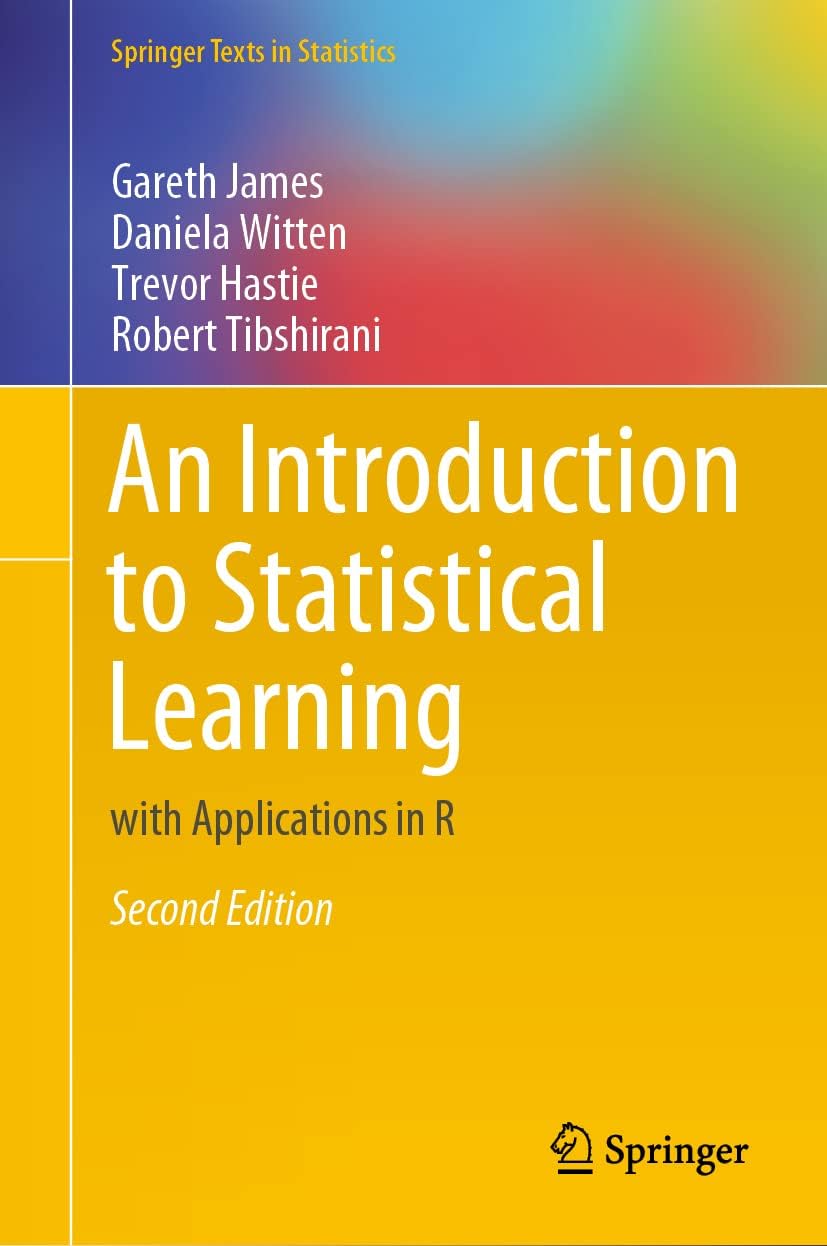
An Introduction to Statistical Learning: with Applications in R (Springer Texts in Statistics)
Product ID: 736755542
SAR 524
1
Sold byAmazon KSADelivered byDesertcartCustomer service byDesertcartReturns14 days · 30 with PRO
Buyer Protection · Full refund if your order doesn't arrive as described.
Desertcart purchases this item on your behalf and handles shipping, customs, and support to KSA.
Secure transaction
Description
desertcart配送商品ならAn Introduction to Statistical Learning: with Applications in R (Springer Texts in Statistics)が通常配送無料。更にdesertcartならポイント還元本が多数。James, Gareth, Witten, Daniela, Hastie, Trevor, Tibshirani, Robert作品ほか、お急ぎ便対象商品は当日お届けも可能。
Specifications
| Amazon 売れ筋ランキング | 洋書 - 47,204位 ( 洋書の売れ筋ランキングを見る ) Mathematical & Statistical Software - 23位 Data Mining - 30位 Theory of Computing - 63位 |
| ISBN-10 | 1071614177 |
| ISBN-13 | 978-1071614174 |
| カスタマーレビュー | 4.6 5つ星のうち4.6 (447) var dpAcrHasRegisteredArcLinkClickAction; P.when('A', 'ready').execute(function(A) { if (dpAcrHasRegisteredArcLinkClickAction !== true) { dpAcrHasRegisteredArcLinkClickAction = true; A.declarative( 'acrLink-click-metrics', 'click', { "allowLinkDefault": true }, function (event) { if (window.ue) { ue.count("acrLinkClickCount", (ue.count("acrLinkClickCount") || 0) + 1); } } ); } … |
| 出版社 | Springer |
| 商品の重量 | 1.19 Kilograms |
| 寸法 | 16.51 x 3.18 x 24.13 cm |
| 本の長さ | 622ページ |
| 版 | Second Edition 2021 |
| 発売日 | 2021/7/30 |
| 言語 | 英語 |
Common Questions
Yes, all products are sourced directly from authorized retailers in the US, UK, UAE and India. We maintain strict quality control processes and verify each product before shipping. All items come with applicable manufacturer warranties and are covered by our standard return policy.
Delivery times vary by destination country, typically ranging from 3-9 business days. Each order is fully trackable through our system. We handle all customs clearance and use reliable courier partners for last-mile delivery. You'll receive regular updates about your order status via email and our app.
Desertcart is an international e-commerce platform operating since 2014. We securely process thousands of orders globally each day. Every product goes through our quality verification process before delivery, and we provide end-to-end order tracking, 24/7 customer support, and a comprehensive returns policy to ensure a safe shopping experience.
Our prices include the product cost, international shipping, import duties, customs clearance, and local delivery charges. We handle all customs and import procedures, ensuring there are no hidden fees upon delivery. PRO members receive additional benefits including free shipping.
Trustpilot
TrustScore 4.5 | 7,300+ reviews
Shop Global, Save with Desertcart
Value for Money
Competitive prices on a vast range of products
Shop Globally
Serving millions of shoppers across more than 100 countries
Enhanced Protection
Trusted payment options loved by worldwide shoppers
Customer Assurance
Trusted payment options loved by worldwide shoppers.
Desertcart App
Shop on the go, anytime, anywhere.