
Buy anything from 5,000+ international stores. One checkout price. No surprise fees. Join 2M+ shoppers on Desertcart.
Desertcart purchases this item on your behalf and handles shipping, customs, and support to KSA.
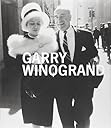
Widely regarded as one of the most important photographers of the 20th century, Garry Winogrand (1928–1984) did much of his best-known work in Manhattan during the 1960s, becoming an epic chronicler of that tumultuous decade. But Winogrand was also an avid traveler and roamed extensively around the United States, bringing exquisite work out of nearly every region of the country. This landmark retrospective catalogue looks at the full sweep of Winogrand’s exceptional career. Drawing from his enormous output, which at the time of his death included thousands of rolls of undeveloped film and unpublished contact sheets, the book will serve as the most substantial compendium of Winogrand’s work to date. Lavishly illustrated with both iconic images and photographs that have never been seen before now, and featuring essays by leading scholars of American photography, Garry Winogrand presents a vivid portrait of an artist who unflinchingly captured America’s swings between optimism and upheaval in the postwar era. Review: A MUST-HAVE book for so many reasons! - First of all, it's an unbelievably fascinating book, not only for the photo art of Winogrand, but the behind-the-scenes, background information, the in-depth analysis, the text that goes with it, and the collection of photos.....it's all superb. And the quality of paper and book binding is all high-end. Just reading the first few pages and studying the plates that are being referenced, has influenced my own photo work, especially the "darkroom" techniques I can see in the images. If you're a serious student of photography, you must have this book. If you're interested in art history and modern photography in particular, get this book. If you just want it to sit on your coffee table and stir up conversation, get this book! It's big. It's hardbound. It's a must-have book and when you get, it I'm sure you'll come up with plenty of your own reasons why! Review: How much Winogrand is too much Winogrand? - The last major retrospective of Gary Winogrand's work was published in 1988, with John Szarkowski, the aging but still authoritative god of photography as the editor and essayist--and the most notable disclosure in that work was that Winogrand died with a freezer full of exposed film--2,500 rolls--plus thousands more rolls of work never really edited or printed--and that Winogrand, at the end, didn't even care enough to hold the camera steady. The view given by Szarkowski seemed to be that no one in their right mind would ever stagger through Winogrand's every last frame, just to see what was there, and that much of what the man saw would never be seen again. Twenty five years later, a team of dedicated scholars have proven Szarkowski wrong (much to his posthumous delight, I'm sure)--this very thick and heavy volume is teaming with Winogrands never seen in print before, presented in parings and sequences that delight the eye. I'm old enough to remember (as a child) much of the world that Winogrand photographed (almost old enough for a reprise of the Tom Lehr joke about Mozart--when he was my age, he'd been dead for two years), and am amazed at how he captured not just the surface, but he essence of the eras he lived through. While some of the other reviewers have complained about how the new images are being printed from digital scans of the negatives, I have no problem with this way of presenting the images, at least in book form--first, all the images in the book are reproduced in duo-tone, and are based on electronic scans--and secondly, I suspect that the complaints are being registered by those who never experienced the "donkey-work" involved in processing silver materials--and worth noting is that Winogrand always processed his own film, but he didn't print even work prints after 1971--I'm grateful for the new digital technology, especially the ability to scan an entire "contact sheet" of a roll of film, and very quickly invert and enlarge the images--I don't think we would have this new look at Wiongrand's work without this change. Secondly, I don't think Winogrand every really gave much of a damn about printing--I own one of his "finished prints", which I'm certain was produced by a custom printer and signed later in a batch--but I'm glad that Winogrand spent his time making new images, and not in the darkroom, cranking out print after print of the same images, trying to meet what his gallery considered what the market would bear... I haven't seen the show hanging on the wall--maybe the new digital images are weaker in that form--but once again, I don't have a problem with work being presented in any form, just so we can see it... I feel, at the end of scanning this book for the first time, like I've just had one of the best meals ever--one photograph more would be too much. I can't imagine a better book of his work. My advice--buy this book--now.
| Best Sellers Rank | #1,384,992 in Books ( See Top 100 in Books ) #878 in Individual Photographer Monographs |
| Customer Reviews | 4.5 out of 5 stars 72 Reviews |
A**R
A MUST-HAVE book for so many reasons!
First of all, it's an unbelievably fascinating book, not only for the photo art of Winogrand, but the behind-the-scenes, background information, the in-depth analysis, the text that goes with it, and the collection of photos.....it's all superb. And the quality of paper and book binding is all high-end. Just reading the first few pages and studying the plates that are being referenced, has influenced my own photo work, especially the "darkroom" techniques I can see in the images. If you're a serious student of photography, you must have this book. If you're interested in art history and modern photography in particular, get this book. If you just want it to sit on your coffee table and stir up conversation, get this book! It's big. It's hardbound. It's a must-have book and when you get, it I'm sure you'll come up with plenty of your own reasons why!
D**R
How much Winogrand is too much Winogrand?
The last major retrospective of Gary Winogrand's work was published in 1988, with John Szarkowski, the aging but still authoritative god of photography as the editor and essayist--and the most notable disclosure in that work was that Winogrand died with a freezer full of exposed film--2,500 rolls--plus thousands more rolls of work never really edited or printed--and that Winogrand, at the end, didn't even care enough to hold the camera steady. The view given by Szarkowski seemed to be that no one in their right mind would ever stagger through Winogrand's every last frame, just to see what was there, and that much of what the man saw would never be seen again. Twenty five years later, a team of dedicated scholars have proven Szarkowski wrong (much to his posthumous delight, I'm sure)--this very thick and heavy volume is teaming with Winogrands never seen in print before, presented in parings and sequences that delight the eye. I'm old enough to remember (as a child) much of the world that Winogrand photographed (almost old enough for a reprise of the Tom Lehr joke about Mozart--when he was my age, he'd been dead for two years), and am amazed at how he captured not just the surface, but he essence of the eras he lived through. While some of the other reviewers have complained about how the new images are being printed from digital scans of the negatives, I have no problem with this way of presenting the images, at least in book form--first, all the images in the book are reproduced in duo-tone, and are based on electronic scans--and secondly, I suspect that the complaints are being registered by those who never experienced the "donkey-work" involved in processing silver materials--and worth noting is that Winogrand always processed his own film, but he didn't print even work prints after 1971--I'm grateful for the new digital technology, especially the ability to scan an entire "contact sheet" of a roll of film, and very quickly invert and enlarge the images--I don't think we would have this new look at Wiongrand's work without this change. Secondly, I don't think Winogrand every really gave much of a damn about printing--I own one of his "finished prints", which I'm certain was produced by a custom printer and signed later in a batch--but I'm glad that Winogrand spent his time making new images, and not in the darkroom, cranking out print after print of the same images, trying to meet what his gallery considered what the market would bear... I haven't seen the show hanging on the wall--maybe the new digital images are weaker in that form--but once again, I don't have a problem with work being presented in any form, just so we can see it... I feel, at the end of scanning this book for the first time, like I've just had one of the best meals ever--one photograph more would be too much. I can't imagine a better book of his work. My advice--buy this book--now.
E**E
A Must for Winogrand Fans
Great companion book to a show that was soooooo crowded it was a waste of time trying to move through the galleries. Many of my favorite images are here (and in the collection of Winogrand books I already have). The scholarship is a good read and the book will occupy your imagination long after you have finished with it.
M**E
About the best photography book I own
I've always been curious about Winogrand and was unfortunate to miss the show at SFMOMA, but this book certainly makes up for it, not only in the vast number of images to pour over [which may be the best way to view them anyway] but even more importantly in terms of the writings. Leo Rubinfien's essay is one of the best commentaries on the cultural changes from the fifties to the seventies I know of, and that's not even taking into consideration his excellent account of the life lived through those times by Garry. The other essays hold to the same standard; I can't recommend this highly enough to anyone even remotely interested in those times or this artist.
K**S
Garry Winogrand (Metropolitan Museum, New York: Exhibition Catalogues)
This book is just amazing. If you want to know what street photography in the '60s really was, this is the book uou are looking for. If we take into account that most of Garry Winogrands books are out of print, thus collectible and their price is only for the few, then there is no other alternative to enter onto the world of Garry Winogrand. The book follows the life and work of Garry Winogrand chronologically (with many bio information), which is the contemporary approach to artists' work by the modern curators. The print quality of the book is exceptional.
A**R
Good photos, but....
I love Winogrand's photography and this book highlights many of his wonderful photos. However; I'm very frustrated by the waste of space, as there are huge blank portions on many pages. I recommend this book because it's undoubtedly the most comprehensive, but it could have been put together a lot better.
G**O
Buy one; get one FREE!
Yup, I bought two for the price of one, as, like Mr. Winnogrand, things just came together that way. The cover photo itself is so intense, as well as the one on the back cover, I have to sneak the book into the bookshelf some way that I don't have to see either. I know though he was a man after my own heart, as to who else could be hired by the Fort Worth Stock Association and after the proofs were delivered to the Association, Winnogrand was banned from the state? " Well, I have been kicked out of better places before?" he might have said? What a guy, Jewish too, and you know what he said about Jews and photography, don't you? To be a good photographer you have to be Jewish, even if you weren't born Jewish. Ansel Adams was just the opposite, but Ansel stuff sells for more.
D**D
A wasted opportunity
This is an absolutely amazing book, and a must buy for students of photography, particularly for fans of the school of street photography personified by Henri Cartier-Bresson, Robert Frank, and Lee Friedlander. Not only is the book a definitive catalog of Winogrand's oeuvre, but it's a matchless chronicle of mid-twentieth-century America as seen through the eyes of a true creative genius. So why am I giving it only three stars? It doesn't even deserve four stars, for one simple reason: poor presentation. I'm not referring to the printing quality, which is pristine. And there's copious written material for those who want to delve further into the work. Here's the problem: Winogrand worked in landscape format, for the most part, but this book is in portrait. Most of the pages contain a single horizontal image on the top half of the page, and nothing on the bottom half. I kid you not! Almost half of the page space in this book is solid white, which equates to wasted space in my book. And if you're holding it in your lap, it's the part that's nearest your eye. Publishers: Why, oh why did you not print the book in landscape format? I would've given that five stars, no problem.
E**H
Excellent ouvrage
On y retrouve un large aperçu de l'oeuvre de Winogrand et le texte (en anglais) résume bien l'artiste. Vu le prix inabordable des ses livres originaux, celui-ci trouvera certainement sa place dans votre bibliothèque si vous aimez la photographie et plus particulièrement "The Street Photography"
L**A
the work of a real master
a great book
A**N
Amazing
I'd been a fan of Winogrand every since first seeing his work inthe early 90s... but had always struggled to find decent and acceptably priced publications. So I was really excited when I saw this catalogue available. It certainly won't disappoint. A mamouth book with hundreds of images and some great writing. (Especially as regards posthumously printing Winogrand's work). I bought this at it's inital price (as soon as it was available) and I'm still happy I did. Simply fabulous.
K**S
Karol Lis
Ich bin sehr zufrieden und glücklich mit Garry auf dem Regal die Bücher stehen stolz dabei und wurde ich gerne noch mal bestellen etwas von streetphoto :)
原**美
充実の内容
掲載されている作品数も多く、充実している。価値ある一冊だった。
Trustpilot
2 weeks ago
1 month ago