Desertcart purchases this item on your behalf and handles shipping, customs, and support to KSA.
🚀 Unlock next-level IoT innovation with the Teyleten Robot ESP32S – where power meets precision!
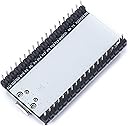
The Teyleten Robot ESP32S Development Board is a compact, dual-core 240MHz microcontroller featuring integrated 2.4GHz WiFi and Bluetooth connectivity. Designed for Arduino compatibility, it offers a user-friendly, pre-soldered layout optimized for breadboard use, with built-in voltage regulation supporting 5V input. Ideal for professional developers and makers seeking a powerful, versatile platform for IoT and embedded projects.
| ASIN | B09J95SMG7 |
| Best Sellers Rank | #150 in Single Board Computers (Computers & Accessories) |
| Brand | Teyleten Robot |
| Built-In Media | [Reset and boot buttons] |
| CPU Model | ARMv7 |
| CPU Speed | 0.24 GHz |
| Compatible Devices | Arduino, Microcontrollers, Computers |
| Connectivity Technology | Bluetooth, Wi-Fi |
| Customer Reviews | 4.5 out of 5 stars 237 Reviews |
| Item Dimensions L x W x H | 0.19"L x 0.1"W x 0.05"H |
| Manufacturer | Teyleten Robot |
| Memory Storage Capacity | 524288 bytes |
| Model Name | ESP32 |
| Number of Items | 3 |
| Number of Packs | 3 |
| Operating System | FreeRTOS |
| Processor Brand | Espressif |
| Processor Count | 2 |
| Processor Speed | 0.24 GHz |
| RAM Memory Installed | 524288 bytes |
| RAM Memory Technology | SRAM |
| Ram Memory Installed Size | 524288 bytes |
| Total Usb Ports | 1 |
| Wireless Compability | 802.11bgn |
A**A
Versatile and Reliable ESP32 Modules - Perfect for IoT Projects
I recently purchased a set of three ESP32 WROOM-32 modules, and I must say, I am thoroughly impressed with their performance and capabilities. These modules are a game-changer for anyone involved in IoT projects, offering a wide array of features and impressive specifications. Let's dive into some of the key specs of the ESP32 WROOM-32: - Dual-core Xtensa 32-bit LX6 microprocessor, running at up to 240 MHz - 520 KB of SRAM and 448 KB of ROM - 4 MB of flash memory for storing code and data - 802.11 b/g/n WiFi and Bluetooth 4.2 (BLE) connectivity - 34 GPIO pins, supporting various interfaces like SPI, I2C, UART, and more - 12-bit ADC and 8-bit DAC for analog signal processing - Cryptographic hardware acceleration for secure communication These specifications make the ESP32 WROOM-32 a powerhouse in the world of IoT. The dual-core processor enables efficient multitasking and high-speed execution, while the ample memory allows for complex applications and data storage. The built-in WiFi and Bluetooth connectivity make it easy to integrate these modules into wireless networks and communicate with other devices seamlessly. Upon receiving the modules, I ran a comprehensive health check on each one, testing various aspects such as chip information, memory, flash memory, WiFi connectivity, and internet connectivity. I'm thrilled to report that all three modules passed the tests with outstanding results, demonstrating their reliability and performance. Setting up the ESP32 WROOM-32 modules with the Arduino IDE is a breeze, even for beginners. Simply follow these steps: 1. Install the Arduino IDE on your computer. 2. Add the ESP32 board package URL to the Arduino IDE preferences. 3. Install the ESP32 board package through the Boards Manager. 4. Select the "NodeMCU-32S" board from the "Tools" menu. 5. Connect your ESP32 module to your computer via USB. 6. Select the appropriate port from the "Tools" menu. 7. Start programming and uploading your sketches to the ESP32 module. With its impressive specifications and ease of use, the ESP32 WROOM-32 opens up a world of possibilities for IoT projects. Whether you're building smart home devices, wearable sensors, industrial control systems, or anything in between, these modules provide the necessary computing power, connectivity, and flexibility to bring your ideas to fruition. In conclusion, I wholeheartedly recommend the ESP32 WROOM-32 modules to anyone embarking on IoT projects. Their powerful specs, reliable performance, and compatibility with the Arduino IDE make them an excellent choice for both beginners and experienced developers. These modules are a must-have for anyone serious about IoT development.
A**D
Simple and User-Friendly
Easy to use and works as expected for development projects.
B**V
Good module, but misprint of pinout on bottom
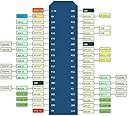
Module works as it should. But there are pinout labels on the underside and one is mislabeled (didn't check them all), so best to refer to the pinout diagrams rather than the labels on the bottom. See the photo. The pin next to the 5 v in pin is labeled GND. I tried using it at ground. The module lights up but doesn't work. On the pinout diagram it's labeled CMD. The actual GND pin is the sixth one done--labeled correctly.
C**N
ESP-VROOM-32 38P works on Arduino on Linux
Great value IoT board, tested with Arduino 1.8.19 on Debian 12. There is no Teyleten Robot in the library so I used "ESP32 Dev Module" from Espressif's ESP32 Arduino core. The pinout is the same as Espressif's ESP32-DEVKITC board. The SD0 pin is mislabeled SDD. There's a bug in the build where you have to rm /tmp/arduino_build_*/includes.cache after every compile.
H**Z
Well-built, hold up to longer-term use
I've used these a lot for about half a year now, with lots of different use cases, digital and analog outputs, I2C, SPI, some simple Wifi use cases and they have worked flawlessly in every situation. I'm very happy with them and will buy more. They are pin-compatible with many other ESP-32 boards. Mine says NodeMCU on the bottom of the PCB, so if you don't find this particular board in your board manager, select the NodeMCU board and it should work also. The board includes a nice LT1117 800 mA regulator, so it has plenty of power for any use case.
B**A
Very useful for IoT projects, 9 and counting
Updated review after a year of using these (now 9 of them): I really like them, they're solid, durable, no pressing "BOOT" button to get them to flash - they just work. Not as nicely silkscreened on the pinout and buttons as other brands. The docs from other ESP32 38 pin variants work for these as well. Code is mostly via Arduino IDE, "ESP32 Dev Board" works fine.
E**N
Kind of a pain to use, otherwise work fine
Received one package (3x) of the 38 pin model. All of them ultimately run a basic blink sketch without issue, haven't loaded them up with anything beefy or WiFi-involved yet. I will note that--unlike at least one other customer noted--these did not come with a capacitor between EN and GND, which means I had to hold down the BOOT button (which for some reason is labeled "OOI" on these units?) when trying to upload a sketch. That was super dumb, and fortunately adding a 10uF capacitor between the EN pin and one of the GND pins fixed the issue (remember, electrolytic capacitors have polarity, and the stripe down the side indicates the negative leg, i.e. - you should connect that one GND). I was able to successfully upload a sketch via Arduino, using the "NodeMCU-32S" board definition. Unfortunately, that process was not at all aided by the crap silkscreening job on the boards. Or maybe the silkscreen is fine, but either way the plastic frames of the pre-soldered headers partially obstruct all the characters, so at first I thought the board didn't even come with the pins labeled at all! Weird choice to put them on the underside anyway, IMO. So yeah, they work fine, although definitely minus stars for being way more annoying to use than they need to be. Also, this probably isn't a big deal, but I checked the voltage of the 5V pin on one of them when I was powering it via USB and it read 4.5V. Like I said, probably not a big deal, just putting it out there in case you really need 5 whole-ass volts for your project :)
J**B
Working great!
Using these for wled and they perform great!
L**E
السعودية
ما توقعت تجي ثلاثة احسب بس وحده للحين استخدمت وحده منهم وشغاله زين
A**O
“Excelente para aprender y desarrollar proyectos de IoT”
Buen dispositivo para aprender y desarrollar proyectos de IoT. Lo he utilizado con distintos sensores y para enviar datos a una computadora mediante comunicación serial, integrándolos posteriormente en aplicaciones propias. La conexión Wi-Fi y la facilidad para programarlo permiten experimentar con adquisición de datos, servidores y otros proyectos de electrónica. Hasta ahora ha funcionado correctamente y ha sido una buena plataforma para aprender y hacer pruebas. Recomendable tanto para principiantes como para proyectos más avanzados.
S**S
Good quality
Good quality
A**L
Todo muy bien
Llegarn bien empacados y listo para trabajar de facil conexion y cumple con su funcion
J**L
Muy buenos
Muy buen producto, fáciles de usar
Trustpilot
5 days ago
3 days ago