
Buy anything from 5,000+ international stores. One checkout price. No surprise fees. Join 2M+ shoppers on Desertcart.

Desertcart purchases this item on your behalf and handles shipping, customs, and support to KSA.
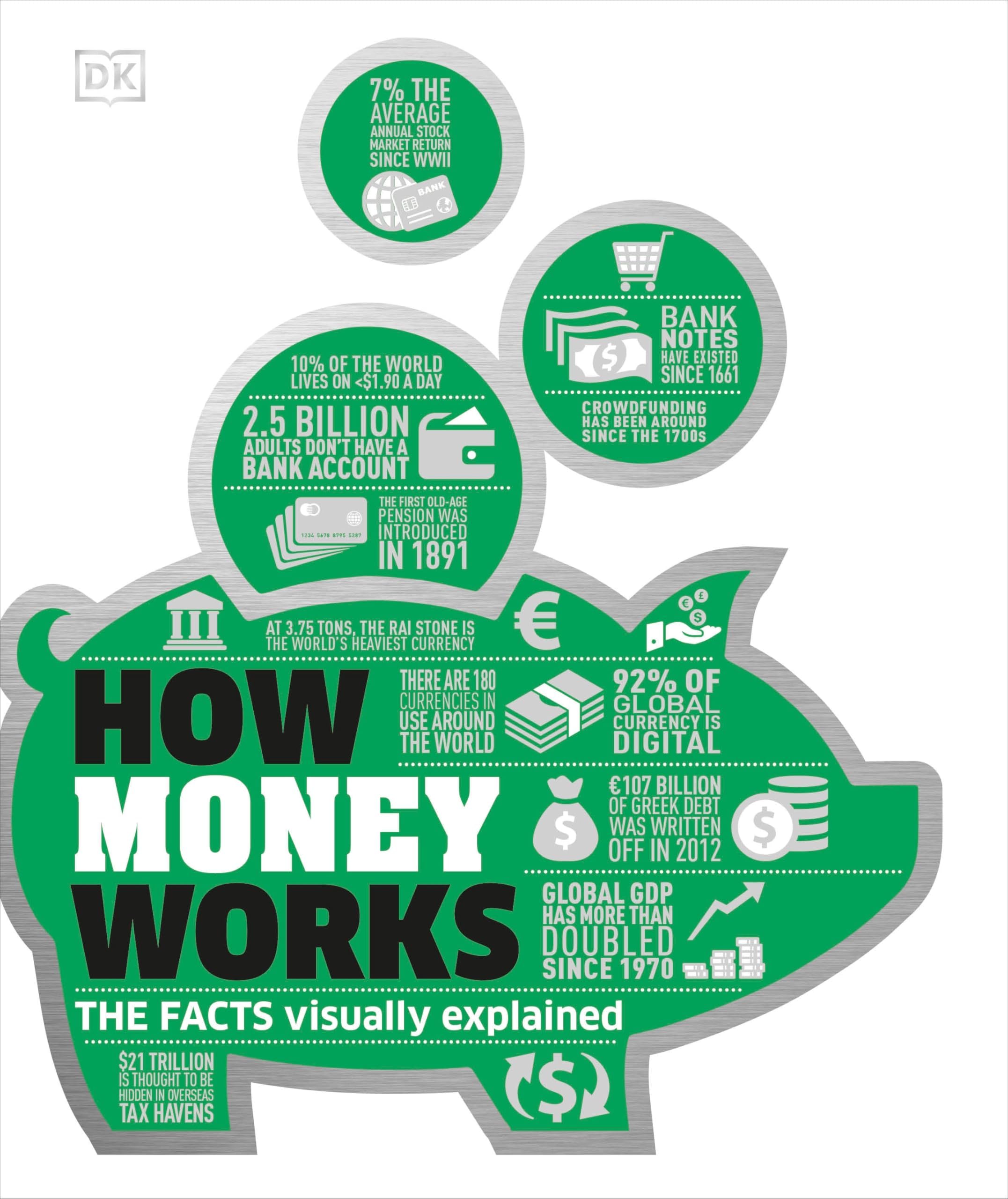
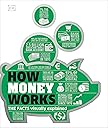
It makes the world go round, but money can truly be an enigma. DK's visual approach breaks new ground. In graphics, charts, and diagrams, How Money Works demystifies processes and answers the hundreds of financial questions we all have. Money facilitates the billions of transactions that take place every day across the globe. Using 'need to know' boxes, step-by-step diagrams, and other eye-catching visuals, How Money Works shows you how this is possible. It explains economic theories, how governments raise and control money, what goes on in the stock exchange, how analysts predict where shares are heading, and many other issues. It busts jargon, explaining terms such as quantitative easing, cash flow, bonds, superannuation, and the open market. This must-have guide to money further features: Key financial concepts in a uniquely visual way, using bold infographics combined with simple, jargon-free language. Genuinely comprehensive, covering every aspect of money - personal, business, and governmental. Defines hundreds of money-related terms, such as cash flow, bonds, superannuation, and the open market. Offers essential basic know-how on everything from managing debt to online fraud. Fully up-to-date, covering topics such as cryptocurrencies (Bitcoin, Litecoin, and others) and quantitative easing. Includes localizable appendix of territory specific reference information. Our forefathers may have used simple bartering to exchange goods and services, but today we depend on complicated financial instruments for pensions, life assurance, mortgages, and more. How Money Works explains how these work, as well as how to avoid on-line fraud and where to invest. With information on the latest forms of funding and currencies such as Bitcoin, this comprehensive book will fast track you to financial literacy and getting the most from your hard-won cash. Review: A very well illustrated, comprehensive handling of the topic of money, for readers of all ages - I have been a fan of the DK books for some time now, years ago I took great pleasure in reading their encyclopedic books about battle or weapons, then I enjoyed their more recent books on History, Philosophy, Psychology, Sociology, Business, Economics and even Crime (I get a feeling that they are going keep producing these and varying the themes as much as they can), these form a kind of complete knowledge library taken all together. Those and these are full of visuals, I am not sure if it is accurate to describe it as using infograms or not but there are illustrations resembling flow charts, there are pie charts, bar charts, other sorts of clever illustrations which correspond to plays on words or common analogies, ie to circulation in the body, lifting weights, fishing in a boat. Something I would say is that I have heard the DK range described as childrens books or at least books for young adults, I dont know why this is at all, these are seriously comprehensive books, I was very impressed with this book (I remember reading for a financial transactions costing and pricing class module and business in the economy module in a general national vocational qualification in my teens and I think this book is more comprehensive than the complete reading lists and lectures I undertook at that time) and its depth and breadth on the topic. Maybe the association came up because of the illustrations but I am not sure that that should mean it is automatically aimed at younger readers, readers of all age groups could benefit from the information here in. I would love to have been able to read this and understand it at a younger age but I am glad that I have to opportunity now in my thirties to do so. The first in this range that I was aware of was How The Body worked, which I thought was a really good general guide to anatomy and even health, I then knew this would be a good book too on the strength of that book but I think this book is probably the best in the series I have read so far and easily ranks alongside the other series of books on Psychology, Philosophy, Sociology or Film. The contents are great, laid out very clearly in the first pages of the book: Money Basics: The evolution of money; Profit-Making and Financial Institutions: Corporate Accounting; Financial Instruments; Financial Markets; Financial Institutions; Government Finance and Public Money: The money supply; Managing State Finance; Attempting Control; Why Governments Fail Financially; Personal Finance: Worth, Wealth, and Income; Investments For Income; Wealth-Building Investments; Managing Investments; Pensions and retirement; Debt; Money in the Digital Age; Money in the UK; Index and Acknowledgements. The index is very good about allows for speedy browsing to select texts if you are a student looking for precise information or citations but also if you are looking for something in particular and it does not stand out from the contents alone (though the contents employ subheadings so they pretty much cover everything). The section on Money In The UK, has perhaps the least amount of illustrations and uses a lot of text, it is broken up by bolded headings, dialogue boxes and subheadings, within this section are covered The London Stock Exchange and FTSE Index; Companies House and corporate accounting; The Bank of England and the UK economy; The UK tax system; National Insurance and indirect taxes; Personal tax; Mortgages and credit cards; Pensions. So, all in all pretty comprehensive. As I said before I think this book should get a general or wide readership, in fact, just about anyone who wants to get a good understanding of finance and economics. I am aware that the book does deal with why governments fail, through hyperinflation or debt default, but does not by the same token investigate failures in financial institutions or banking, this would not be sufficient grounds to become a detractor or be critical of its content, however, as it may be covered elsewhere in one of the others in the series or be a question of politics instead. Review: Muy completo y sencillo. Gran libro. - La manera de exponer los temas es simple y efectiva. Es visual, pero no deja de lado entrar a fondo en los temas. Lo recomiendo mucho.


| Best Sellers Rank | 1,263,462 in Books ( See Top 100 in Books ) 667 in Finance & Stock Market History 7,270 in Business & Economic History 9,460 in Business Reference & Education |
| Customer Reviews | 4.8 out of 5 stars 1,041 Reviews |
L**K
A very well illustrated, comprehensive handling of the topic of money, for readers of all ages
I have been a fan of the DK books for some time now, years ago I took great pleasure in reading their encyclopedic books about battle or weapons, then I enjoyed their more recent books on History, Philosophy, Psychology, Sociology, Business, Economics and even Crime (I get a feeling that they are going keep producing these and varying the themes as much as they can), these form a kind of complete knowledge library taken all together. Those and these are full of visuals, I am not sure if it is accurate to describe it as using infograms or not but there are illustrations resembling flow charts, there are pie charts, bar charts, other sorts of clever illustrations which correspond to plays on words or common analogies, ie to circulation in the body, lifting weights, fishing in a boat. Something I would say is that I have heard the DK range described as childrens books or at least books for young adults, I dont know why this is at all, these are seriously comprehensive books, I was very impressed with this book (I remember reading for a financial transactions costing and pricing class module and business in the economy module in a general national vocational qualification in my teens and I think this book is more comprehensive than the complete reading lists and lectures I undertook at that time) and its depth and breadth on the topic. Maybe the association came up because of the illustrations but I am not sure that that should mean it is automatically aimed at younger readers, readers of all age groups could benefit from the information here in. I would love to have been able to read this and understand it at a younger age but I am glad that I have to opportunity now in my thirties to do so. The first in this range that I was aware of was How The Body worked, which I thought was a really good general guide to anatomy and even health, I then knew this would be a good book too on the strength of that book but I think this book is probably the best in the series I have read so far and easily ranks alongside the other series of books on Psychology, Philosophy, Sociology or Film. The contents are great, laid out very clearly in the first pages of the book: Money Basics: The evolution of money; Profit-Making and Financial Institutions: Corporate Accounting; Financial Instruments; Financial Markets; Financial Institutions; Government Finance and Public Money: The money supply; Managing State Finance; Attempting Control; Why Governments Fail Financially; Personal Finance: Worth, Wealth, and Income; Investments For Income; Wealth-Building Investments; Managing Investments; Pensions and retirement; Debt; Money in the Digital Age; Money in the UK; Index and Acknowledgements. The index is very good about allows for speedy browsing to select texts if you are a student looking for precise information or citations but also if you are looking for something in particular and it does not stand out from the contents alone (though the contents employ subheadings so they pretty much cover everything). The section on Money In The UK, has perhaps the least amount of illustrations and uses a lot of text, it is broken up by bolded headings, dialogue boxes and subheadings, within this section are covered The London Stock Exchange and FTSE Index; Companies House and corporate accounting; The Bank of England and the UK economy; The UK tax system; National Insurance and indirect taxes; Personal tax; Mortgages and credit cards; Pensions. So, all in all pretty comprehensive. As I said before I think this book should get a general or wide readership, in fact, just about anyone who wants to get a good understanding of finance and economics. I am aware that the book does deal with why governments fail, through hyperinflation or debt default, but does not by the same token investigate failures in financial institutions or banking, this would not be sufficient grounds to become a detractor or be critical of its content, however, as it may be covered elsewhere in one of the others in the series or be a question of politics instead.
M**I
Muy completo y sencillo. Gran libro.
La manera de exponer los temas es simple y efectiva. Es visual, pero no deja de lado entrar a fondo en los temas. Lo recomiendo mucho.
I**Z
Good, easy to read and understand
Good infographics!
C**A
Muito interessante!!
A**R
Great book
My kid loved the book
M**N
Great Resource
My son is really enjoying this book! It’s clear and simple and provided a great foundation for understanding how money works.
Trustpilot
3 weeks ago
1 month ago