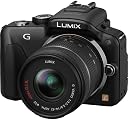
📷 Elevate your visual story with DSLR quality, minus the bulk!
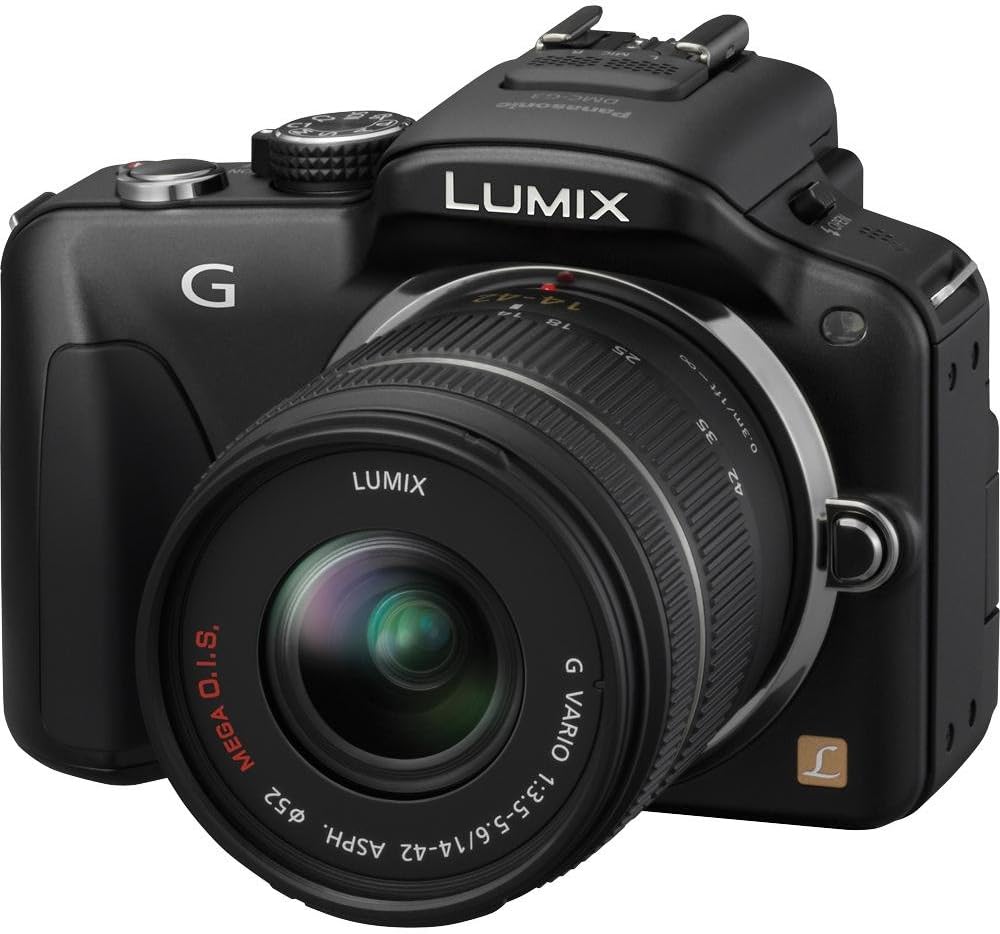
The Panasonic LUMIX DMC-G3 is a 16MP mirrorless Micro Four Thirds camera combining DSLR-grade image quality with compact portability. Featuring a versatile 14-42mm zoom lens, a fully articulating 3-inch touchscreen LCD with advanced autofocus, and Full HD 1080p video capture, it empowers millennial professionals to create stunning photos and videos effortlessly. Its intuitive controls and lightweight design make it ideal for travel, creative projects, and everyday shooting without compromise.
| ASIN | B005058BTW |
| Age Range Description | Adult |
| Aperture modes | Aperture Priority |
| Aspect Ratio | 4:3 |
| Auto Focus Technology | Continuous, Contrast Detection, Face Detection, Live View, Multi-area, Selective single-point, Single, Touch, Tracking |
| Autofocus Points | 23 |
| Best Sellers Rank | #658,660 in Electronics ( See Top 100 in Electronics ) #2,460 in Mirrorless Cameras |
| Bit Depth | 12 Bit |
| Brand | Panasonic |
| Built-In Media | Instruction Manual |
| Camera Flash | Built-In |
| Camera Lens | 14-42mm zoom lens |
| Color | Black |
| Compatible Devices | Micro Four Thirds |
| Compatible Mountings | Micro Four Thirds |
| Connectivity Technology | HDMI, USB |
| Continuous Shooting | 4 |
| Customer Reviews | 4.0 out of 5 stars 69 Reviews |
| Digital Zoom | 4 |
| Display Fixture Type | Articulating |
| Display Maximum Resolution | 460000 |
| Display Resolution Maximum | 460,000 |
| Display Type | LCD |
| Dots Per Screen | 460000 |
| Effective Still Resolution | 16 mp |
| Expanded ISO Minimum | 160 |
| Exposure Control | Manual, aperture priority, programmed ae, shutter priority |
| File Format | AVCHD |
| Flash Memory Type | SD/SDHC/SDXC |
| Flash Modes | Automatic |
| Flash Sync Speed | 1/60 |
| Focal Length Description | 14.0 - 42.0 millimeters |
| Focus Features | Contrast Detection, Touch |
| Focus Mode | Continuous-Servo AF (AF-C), Manual Focus (MF) |
| Focus Type | Autofocus & Manual |
| Form Factor | SLR-style mirrorless |
| Generation | 3 |
| Global Trade Identification Number | 00885170047563 |
| HDMI Type | Type C Mini HDMI |
| Hardware Interface | HDMI |
| Image Capture Type | Stills & Video |
| Image Stabilization | Optical |
| Image stabilization | Optical |
| JPEG Quality Level | Fine |
| Lens Type | zoom |
| Manufacturer | Panasonic |
| Manufacturer Part Number | DMC-G3KK |
| Maximum Aperture | 3.5 f_stop |
| Maximum Focal Length | 42 millimeters |
| Maximum Shutter Speed | 1/4000 seconds |
| Metering Methods | Multi, Center-weighted, Spot |
| Minimum Focal Length | 14 millimeters |
| Minimum Shutter Speed | 60 seconds |
| Model Name | Panasonic LUMIX G3 |
| Model Number | DMC-G3KK |
| Model Series | G3 |
| Optical Zoom | 4 x |
| Photo Sensor Resolution | 16 mp |
| Photo Sensor Size | Four Thirds (17.3 x 13 mm) |
| Photo Sensor Technology | CMOS |
| Recording Capacity | 60 minutes |
| Screen Size | 3 inches |
| Self Timer | 10 seconds |
| Sensor Type | CMOS |
| Series Number | 3 |
| Shooting Modes | burst shooting |
| Skill Level | Professional |
| Special Feature | Lightweight |
| Specific Uses For Product | Photography, Videography, Traveling |
| Supported File Format | AVCHD |
| Supported Image Format | JPEG, RAW |
| Total Still Resolution | 16 mp |
| Total USB 2.0 Ports | 1 |
| Total USB Ports | 1 |
| Total Video Out Ports | 2 |
| Touch Screen Type | Yes |
| UPC | 231484831013 885170047563 |
| Unit Count | 1 Count |
| Video Capture Format | AVCHD, Motion JPEG |
| Video Output | HDMI |
| Video Resolution | FHD 1080p |
| Viewfinder | Electronic |
| Viewfinder Magnification | 1.4x |
| White Balance Settings | Auto |
| Wireless Technology | Yes |
| Write Speed | 4 fps |
| Zoom | Optical, Digital |
S**.
Finally, I can stop comparing hundreds of cameras
I've been living with a piece of crap Sony Cybershot camera I bought out of necessity years ago when my real camera got stolen on a vacation, and the frustration of shooting on this thing finally got to me. I spent literal weeks annoying my wife and giving myself migraines by comparing all the different kinds of cameras on the market. I'm an amateur, so my priority with photography is having a camera that gives me the simplicity I need now with the potential for greater control down the road. With this in mind I narrowed down my choices to a few camera classes: the Micro 4/3s, Sony NEX's, and enthusiast P+S. Very difficult to only pick one of these. If money was no issue, I'd get at least one interchangeable lens system and one P+S. But alas, money is always a primary factor in these things so I had to make a decision about what was most important to me: picture quality & versatility or portability? After much mental exercise, I decided that having a versatile and high quality camera was more important than something that could fit in my pocket. So that eliminated the Olympux XZ-1 and Canon Powershot S100 that I had been considering (though I'd still love an XZ-1 one of these days). The second decision was far more difficult. Micro 4/3s or Sony NEX? The Sony NEX series is the most popular on Amazon and has all sorts of hype around it. It's so slim, it looks cool, it has that huge APS sensor, etc etc. And in the Micro 4/3s class, there are so many more affordable options and way more lenses available (and let's be honest, glass is a huge element in taking good photos). While I've wanted a Sony NEX since it was first introduced, I actually started leaning towards the Panasonic G3 when put side by side in my comparisons. What really intrigued me about this camera was that it had all the DSLR features built in already and even resembled a DSLR, but at about half the size and weight, and at a pricepoint that was much more agreeable than competing models without those features. No, it didn't have the supermodel body of the Sony NEX, but seemed quite a bit more practical. Personally, I am not always going to remember to bring a detachable flash with me when I take my camera out on trips. Nor am I going to feel excited about spending $200 or $300 on a separate viewfinder that I also need to keep track of. The G3 integrates these basic (and in my mind, essential) functions into the camera body, eliminating the possibility of someone absent-minded like me forgetting items at home... or worse, on the road. The other thing that made the G3 rise to the top of my list was the swivel LCD screen. While the Sony NEX-5N has the articulating screen, I find the G3's screen with its full range of motion to be significantly better. I prefer the screen being off to the side so that my hand holding the camera doesn't interfere with my view of the screen, especially if I'm holding it way above my head. Both cameras can achieve the same kinds of photos, but the G3 makes it easier. The EVF on the G3 is also pretty good. It's a lot easier to adjust menu settings on the LCD, but the EVF controls are sufficient for most things I want to do, and I find myself using the EVF just as much if not more than the LCD for composing shots. So anyways, I ended up getting the G3 (obviously). I've only had it for a few days and still learning the basic modes and settings, but I can say pretty definitively that it takes excellent photos, gives me the fast autofocus and blurred backgrounds I was craving, is extremely well constructed and feels great in the hand, and is just a pleasure to use. The included zoom lens is not that fantastic, but it's a good enough starter lens for someone like me. With a 32GB SDHC card installed I can take 1,141 photos in combined RAW+Fine mode which is more than I'll ever need in one day. Well, who knows - I am traveling to Yellowstone soon :) PS: Definitely keep your eye on the price of this camera as it dropped twice within a week from the date I purchased it. EDIT 5/10/12: After a few hundred shots in different conditions I've learned a few extra things I wanted to share. The main thing I've noticed is that in low light, indoor situations, the iAuto mode will not raise the ISO sufficiently to capture the shot. It seems to always want to shoot at 800 during the night, so I find myself switching into Program mode and changing ISO to 1600. It makes a tremendous difference. Noise is completely absent from these shots too. Another thing I've had to change is the behavior of the manual focus ring in different record modes. It's called MF Assist, and if you start adjusting the manual focus ring on the zoom lens when in MF mode, it will zoom in on the area you're pointing at on your LCD or EVF. This makes it very difficult to compose a shot, because now all you can see is a fuzzy square in the middle of your screen resulting from that digital zoom. I promptly turned this feature off after missing a few great photo opportunities while in MF mode - I have no idea where this would ever come in useful. One last thing, the delay when recording an image in RAW+Fine mode is substantial, so I would go to only Fine or only RAW mode when you are doing any kind of action shots, even some photo shoots. Maybe I'm just impatient, but a few seconds can mean the difference between THE shot and a throwaway shot. That's it for now - all in all I am still enamored with this camera. Because of the inadequate ISO in iAuto mode in low light, I'm pretty much staying in Program mode these days, with white balance set to Auto and ISO manually adjusted based on what I'm shooting. It didn't take long to figure out how to cycle between these settings quickly, another reason I love having the manual mode dial on the camera body.
R**H
Panasonic G3 short personal experience summary
I bought this compact and powerful camera as a hybrid still-video camera. It is a very good camera, however there are some disappointments: The good: 1. Very good RAW quality files. Can produce great and very sharp images 2. Excellent prime lenses (25mm and 34mm). 3. Good metering. 4. Excellent target tracking. I.E. touch press to select a target and the camera does a good job tracking the target you selected. 5. Excellent ergonomics. Everything is either at a single button away or at a pop-up menu away with minimal button presses. Very customizable for quick control. 6. Very compact and light dimensions. 7. Very quick focus. In fact, it is hard to go back to DSLR which is usually slower to focus. The Bad: 1. JPEG colours are BAD. Must use different colour scheme than what comes from the camera. 2. No auto-ISO in M mode. If you want to shoot in a specified Aperture and Shutter speed, you must also select ISO manually. If you afterwards switch modes you are left with manual ISO. 3. Focus does not follow tracked target. The target is well tracked, but the focus in video can take several seconds to follow. I find myself frequently half-pressing the shutter to refocus. Thus it's actually a semi-automatic focus only. 4. AF-C is pretty useless and will end up with misfocused shots. 5. Won't focus in low light. If light is not sufficient the camera will simply refuse to try and focus and instead will flash a red square. However, this needs lower light level then just indoor evening lights. 6. Dynamic range is limited, and even at a good exposure the blacks are sometimes blocked. More then I am used to with other cameras. This is true even in base ISO. Specially evident with girls in black hair and bright clothes. That's pretty much what I can come up.
G**T
Never thought I would switch to Panasonic, but here we go ...
Though I owned a pretty good Panasonic video camera in the past, Panasonic's name never associated in my mind with quality photo cameras, but I'm happy I've been proven wrong. I did quite serious research in various DSLRs, 4/3rds, mirror-less APS-C cameras, and ended up choosing G3. It's not the best camera in the world, every camera has its own trade-offs, it's just the most satisfactory camera for my needs for the money I was willing to spend. Your mileage may vary. First of all, I would recommend to anybody considering buying this (or any other) camera do three things: -- Read professional reviews on dpreview dot com, it's important to see the objective tests and read professional opinion. But don't make final decision based on professional reviews. What reviewers achieved in controlled environment, putting their best efforts, may not be representative of what you get. In fact most cameras look in reviews much better than in reality. -- Check the average Joe the photographer pictures on pbase, flickr, etc. See how punishing or forgiving the camera is, compare to other cameras. I find the pictures of water especially revealing. Does the water look dark, muddy, blotchy with visible noise, or pleasantly smooth, even oily? I found many G3 water images very pleasing. It's possible for a camera to produce outstanding results in controlled environment and yet fare much poorer in casual use. -- If possible, handle the camera in the store. See whether you like the weight and size, how soft/hard the release button is, whether you like the viewfinder, are dials/buttons readable, how quickly it focuses, etc. When I was trying to decide between Panasonic DMC-G3 and Sony NEX-5N, I found the first was a lot more comfortable in my hands, and I immediately noticed that Sony was hunting trying to focus in low light situation, while Panasonic locked focus quickly and silently. The small stuff like that may make a superb otherwise camera a source of annoyance, so try it before buying. I don't want to repeat technical reviews, which you can easily find on the web, rather mention pros and cons of this camera in my subjective opinion. Pros: * Perfect size and weight. This camera feels very comfortable in my hands and is easy to carry around. I have a Canon DSLR also and find it too heavy, too cumbersome to carry, especially with large lenses. Most pictures require little or no post-processing in normal settings. Colors are pleasing, well saturated, contrast is perfect, default sharpening is just right. Jpeg images are acceptable for web use, raw images look much better in print, especially when shooting landscapes. Though I think the colors are close to reality, I wouldn't vouch for that and frankly I don't care. I'm not a forensic photographer, it's more important to me if the colors are pleasing to look at and bring up memories of the event. So when I hear from Canon DSLR users about their plasticky dull colors that they are very real, I can't care less if it's true or not. I know that bringing up pleasing vibrancy in Canon images isn't easy and often impossible. After using Canon DSLRs for almost ten years I feel a lot happier with Panasonic images. * Autofocus is very quick and absolutely silent. * Manual focusing with three mode magnifier works great. Since the picture you see in the viewfinder comes from the sensor, what you see is what you get. No front or back-focusing problems, with any lenses, which is a common problem even with expensive DSLRs. Additionally, auto+manual focusing mode is an absolute gem. I keep camera always in this mode. If you don't have an opportunity to manually focus, do nothing, camera will focus automatically; if you do want to focus manually, touch the focus ring and camera will assist you. * I like the fact that flash is built in, and not a flimsy attachment, like in other cameras. It's quick to charge and always at hand, which is great because you never know when you might need it. * An electronic viewfinder is also a very good idea, in most cases it's more convenient than LCD. It's not as good in low light as optical viewfinder, but it shows more useful information and has additional functionality that optical viewfinders don't have, like manual focus assist. * Swiveling touchscreen LCD is also pretty handy. It makes it very easy to shoot from any position. I also like the fact that you can touch the screen to select the focus area and camera starts tracking it. * Good sensor resolution and more importantly high spatial frequency contrast produces well defined images. Pixel peeping folks should be satisfied. Full-size images look spectacular on large screen monitors. Enlargements are pretty easy too, 11x14 can be viewed from any distance without pixelization or loss of sharpness. I also printed 20x30 and they look sharp from 2 feet or more. * Video looks very good to me, though I haven't used it much. * If you have a Panasonic large-screen TV, then pop the SD card straight from the camera in to TV SD slot and select Viera tools and you can watch videos or slide shows without any additional processing. Cons: * Buttons on the right side could have been designed better. I frequently inadvertently press some of them with the thumb. * Buttons take time to get used to and remember how to set what you want. It's frustrating to scroll through pages of menus trying to locate stuff. * Low light, low contrast focusing can be imprecise, but this is a common problem of contrast focusing cameras. * High ISO pictures aren't particularly bad, but noise and blurriness become visible even on modestly large prints. It's not bad for web, but for large prints one should keep ISO under 200. * Battery is weak, good for only 270 pictures. * The choice of lenses is not big and they are quite expensive. * No Photoshop included! Instead you get a Silkypix software. It misses many useful Photoshop features, though it does have the essentials, but it's also a useability disaster. The program is so backwardly designed, it looks like it was created in 1980's. Finally, a few recommendations from personal experience. Shooting in RAW reveals more small detail and more importantly preserves better tonal transitions in landscape photos, so they look a lot better, I would recommend using RAW for those pictures for any size prints. To produce sharp, detailed pictures for large prints, you should keep ISO low, shutter speed shorter than 1/2f - 1/4f, or better yet use a tripod. Test your abilities to hold the camera steady, take pictures hand-held and with tripod and compare them on pixel level to see how much your hands are shaking. Every lens has its sweet spots where it shows best sharpness and contrast. You can find MTF charts for many lenses on the web. Many lenses have the best performance around F8. It also makes sense to use manual focus when feasible. Again, compare manual focusing with autofocus in various light condition to see when to use what. Taking pictures with telephoto 200-300 mm lens can be challenging. When you close the aperture down to F8, and set shutter to at least 1/1000, and ISO to 160, you can shoot only in a very bright sunny day. Therefore, a tripod when using telephoto lenses is virtually always a necessity. Also if you have difficulty manually focusing because your hands are shaking, you aren't likely to get sharp pictures. Get some practice on a gun range, familiarize yourself with shooting breathing techniques, take a half breath, let some out, hold it, steady your hands, push the trigger slowly. Many people blame a camera or lens for their blurry pictures, while the real reason is shaking hands, or poor focusing, or high ISO.
S**E
good, but there are issues
I enjoy using this camera a lot. It has a great deal going for it. Like, for instance, you can set it to Automatic (idiot) mode with a push of a button wherever you happen to be on the dial, and there's more. Unlike with most cameras, with the G3 you can set the camera to a super-auto mode (via the menus), which allows you to tweak three aspects of the auto mode, viz. exposure compensation, white balance (warmer or colder), and depth of field. This is great, though when you switch out and back into this mode, you have to reset any changes you've made: it goes back to the default settings. Also very positive is the articulating screen, which makes getting flower shots from ground level very easy. So again, another facility that really makes this camera a delight to use. Image quality isn't as good as my Canon S90. I know the cameras can't really be compared, but truth is, the S90 is a compact, fixed lens camera, which I carry around with me when I'm using the G3, so I get to compare similar shots all the time. The S90 is sharper, often gets a better colour balance, and has a superior screen. It doesn't have an electronic viewfinder, and you can't change lenses. The S90, and its successors the S95 and S100, are also a lot cheaper than the G3. I'm just about happy with the image quality, but know for sure that if I want the best images, I would spend my money on a DSLR like the Nikon D5100, which is a $100 more expensive, but in a different world in terms of speed, ease of use, ergonomics, build quality, viewfinder, battery life, and just about everything else I can think of, except weight. There are some negatives beyond slight reservations about image quality. Like, for instance, the fact that the lenses have an excellent manual focus ring, but -- and this is such a big but! -- you have to dive into menus to shift into manual focus. Ridiculous. You're lying on the ground trying to get a dynamic flower shot; the auto-focus is driving you crazy; so you have to dig into menus to get manual control. This is where we go back to a DSLR, which might even be the same price as the G3, but has the intelligence to give you the switch on the lens or camera. There are other important functions buried in menus, which always irritates me. If you want to use exposure compensation you have to click the rear wheel (not totally pleasant for my fingers), then rotate it. To clear the viewfinder icon that comes up, you click the wheel again, which brings up depth of field tweaking, then click again. Three clicks to cycle through. I find this fiddly and ergonomically a bit lacking. It's also pretty easy to change depth of field by mistake, and vice versa. My main concern is that very portable cameras like the S90, S95, and S100 get better image quality, and if you want a serious camera, for the same money or a little more you buy an entry-level DSLR. These are real cameras for people who know photography. Just little details, a certain fiddliness, the diluted image quality, lack of easy switching to manual focus, the limitations of an electronic view finder, the fact that the screen doesn't dim when you raise the camera to your eye, and other niggling details make me wonder exactly where the G3 fits in and whether it's worth its fairly high price tag. It is light, and when you buy the longer zoom you have an amazingly portable package. That's why I'm hanging onto it. When I fly cheaply I can take little baggage, and this saves on weight in a big way. UPDATE (25 June 2012): I should add that the battery life on this camera is about as bad as I have found. I don't use the LCD screen much and I do little reviewing of my snaps, yet I still get fewer than 120 shots per Panasonic battery (I'd say this battery has been discharged around 25 times). If I did a lot of reviewing this would probably fall to 90. A third-part battery manages about two thirds of this. My Nikon D7000 is at least eight times better in terms of battery life. If you're buying this camera, add two or three batteries to your purchase.
R**3
Awesome Camera
I purchased this camera as an upgrade to a Canon S60 P&S and a Sony DCR-SR45 handycam. My son just started playing little league and not only was the S60 not performing but the video from the Sony was really disappointing. It was also a pain dragging both cameras to the games and constantly switching back and forth. I've always wanted to get more into photography but wanted something smaller than the typical DSLR. I also wanted a camera that would take decent HD video in one package. The G3 has been well reviewed and has a few active usergroups out there on the interwebs. The micro 4/3 system now has a nice family of lenses to choose from and can be adapted to most heritage systems from Canon and Nikon. I got the G3 with kit lens and the 45-200mm telephoto. Both arrived the same day in the same box, well packaged and on time. It was clear right away that I had my first real camera... the pictures are stunning and the video is breathtaking.....all in the hands of an enthusiast/amateur. This camera inspires me! Pros: - small and lightweight. It won't fit in your pocket, but it's small enough that you will forget it's there. - good feel/grip when hand holding - full range of control from complete auto to full manual...perfect for upgrade from point and shoot camera for those who want to do more with their camera - take movies from any mode/settings by pushing record button. Movie mode is more or less full auto... which I like since I'm not into videography and just want great home movies. - take pictures while recording movies - intuitive menu system - touchscreen is very useful and surprisingly effective - autofocus is fast and accurate. very cool touch to focus while taking movies or touch to focus/take shot in picture mode. - manual focus is fun and effective with MF assist. - Mega OIS (image stabilization on the 45-200mm) is really nice. note all Panny lumix lenses have OIS in the lens if at all. - bundled software (especially sikypix) actually useful - great family of lenses to choose from - perfect for shooting my son's baseball games! - great high ISO performance up to about 1600. - great resolution at 16MP - built-in electronic viewfinder is really nice. can't imagine buying a competitor's camera without a viewfinder. Cons: - kit lens is slow (ie, you will need flash for most low light/ indoor shots...typical for kit lenses from any brand) - good lenses tend to be very pricey - as with all DSLR type cameras, movies can exhibit "jello effect" if there is excessive camera movement. This isn't too hard to avoid... and forces you to learn to move slowly while taking video which results in better videos anyway. I highly recommend this camera for anyone looking to upgrade from a P&S like I did. You will love it. Consider buying a second lens along with the kit depending on what you typically shoot. The kit is good for general all-purpose stuff. I love my 45-200mm... it was a real bargain and is AWESOME for reaching out to fill the frame with my son from 100ft away or more. From other reviews here and elsewhere, more experienced photographers also seem to be pleased with the G3 for its small size and versatility. But don't take my word for it, read for yourself.
L**S
Great camera
I am an long time photo amateur who had his share of film reflex cameras, several lenses and a home b/w lab. Got tired of carrying the stuff. In the last decade complemented with a compact digital, Canon G series. Good as far as compactness and user control - but limited because of the small sensor size. I live in Argentina, where the HW is more expensive than for you guys in the US. After years watching the technology development and pondering alternatives, a few months ago finally made the move to a system digital camera: a Panasonic G3 with the standard kit zoom. My experience: The G3 is good: lightweight, nice electronic through the lens view, nearly instantenous shots, good controls. Any old SLR user will feel comfortable. ISO 800 images are almost as good as ISO 160, unless you look very, very closely at a large print. The included flash is OK to fill-in purposes. Replacement batteries costing a fraction of the original ones work fine. Jpgs out of the camera are good, but RAWs processed with default settings on the provided Silkypix SW are better. And if you have the time, read carefully the Silkypix help file, a lot of power is hidden in there. The kit lens is OK, but not great in terms of resolution. I bought an inexpensive Fotodiox adapter MD-to-micro 4/3 to use my 30+ years old Minolta lenses. The MD-Rokkor 100 mm F/2.5 makes wonders on the G3: great resolution, nice bokeh, lots of light gathering. Of course autofocus and antishake are gone. The comparision is not quite fair, but it equals a 200mm in terms of full size 35mm. In the real full size sensor world, it would take a Nikon 200mm f/2 with a list price of $ 5.999,95 to have the equivalent... As I do flowers photos, am considering to add the highly regarded panasonic macro 45mm f/2.8 ($ 600). In the meantime, i put to work another oldie, the MD-Rokkor 35mm f/2.8 on a set of m4/3 extension rings, with great results for macro work. And by the way, the 35mm makes an ultrasharp short telephoto lens, two f-stops brighter than the zoom kit lens. To carry all the gear, i use a small camera bag, and also bought a flexible Fotodiox neoprene sleeve for the camera alone. Funny, but fills its purpose. IMHO, very few amateurs do need a larger sensor: today, for practically every system camera in basic configuration, the bottleneck is the lens. Panasonic and Olympus bet on micro 4/3. Nikon and Canon instead care for their formerly analog large customer bases... in a few years we'll know who is Betamax.
E**S
Great picture quality, great size, OK lens.
Picked up this camera as a replacement for my Canon XS. We wanted something with video, and we already had the DMC-GF3 and loved the pictures it took and compact size. The kit lens, like any kit lens, is nice for starting out but not the best option. With the 20mm F2.5, this takes great pictures. The low light responsiveness is not as good as an the APC sensor in the Canon, but far better than point and shoot cameras. The touch screen is fairly responsive and the electronic viewfinder works well even in full sunlight, although it takes a little getting used to. The body is smaller than full DSLRs, due to the lack of a mirror and smaller sensor. It is not too small to hold firmly, however. My only complaint about the ergonomics is the placement of the button on the back is right where my palm sits during shooting, For a non-professional photographer like myself, this was an excellent switch; the size and weight difference more than make up for the slightly lower picture quality in low light. Also, the added video features were exactly what I was looking for, and you can't beat the price.
J**R
Unethical seller 6Ave
The rating is for the seller 6 ave. I did a lot of research before buying this camera. I waited 10 days for it to arrive. Finally got it the day before my vacation and I was so looking forward to using it. I opened the box and immediately saw they sent me the wrong camera. The model they sent retails for a couple hundred less and while similar is 40% larger. I had considered it when shopping but decided the smaller size was worth the money. 6ave is trying to convince me to keep it. I was told the camera I bought is out of stock (despite Amazon site saying 6 in stock). I was told the went on their own and"upgraded" me to this model! I am still waiting to get my return authorized and my $621.99 refunded. And no camera for my vacation of course. This is not an ethical seller and I hope Amazon stops using them
Trustpilot
1 month ago
1 day ago