
Buy anything from 5,000+ international stores. One checkout price. No surprise fees. Join 2M+ shoppers on Desertcart.
Desertcart purchases this item on your behalf and handles shipping, customs, and support to KSA.
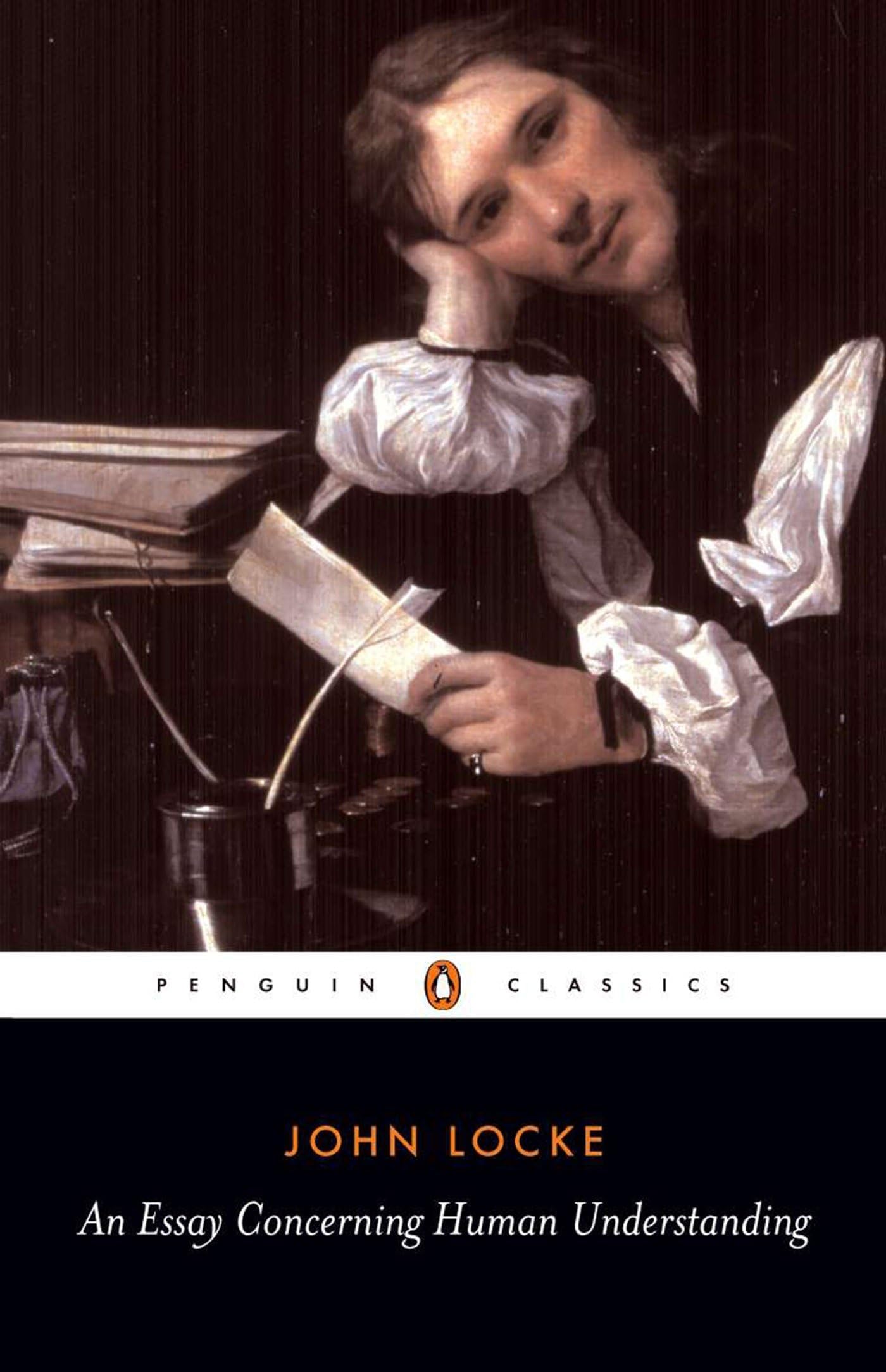
In An Essay Concerning Human Understanding , first published in 1690, John Locke (1632-1704) provides a complete account of how we acquire everyday, mathematical, natural scientific, religious and ethical knowledge. Rejecting the theory that some knowledge is innate in us, Locke argues that it derives from sense perceptions and experience, as analysed and developed by reason. While defending these central claims with vigorous common sense, Locke offers many incidental - and highly influential - reflections on space and time, meaning, free will and personal identity. The result is a powerful, pioneering work, which, together with Descartes's works, largely set the agenda for modern philosophy. For more than seventy years, Penguin has been the leading publisher of classic literature in the English-speaking world. With more than 1,700 titles, Penguin Classics represents a global bookshelf of the best works throughout history and across genres and disciplines. Readers trust the series to provide authoritative texts enhanced by introductions and notes by distinguished scholars and contemporary authors, as well as up-to-date translations by award-winning translators. Review: College text - This book is a required read for most philosophy programs across the country for both undergraduate and graduate studies. If you're not in a college class where you can find other minds to chew this with I would recommend reading journal articles or other writings from philosophers that responded in some way to the premise this author is putting forth. Review: Never thought I'd read John Locke - The actual review is this delightful 'warning' that you will be reading this volume for the rest of your life without having finished it. It is user friendly. Anyone who can read will be able to read this book. But more: It's substance is fully contemporary. A very good read.
| Best Sellers Rank | #104,749 in Books ( See Top 100 in Books ) #58 in Epistemology Philosophy #150 in Modern Western Philosophy #200 in Philosophy Movements (Books) |
| Customer Reviews | 4.2 out of 5 stars 282 Reviews |
M**S
College text
This book is a required read for most philosophy programs across the country for both undergraduate and graduate studies. If you're not in a college class where you can find other minds to chew this with I would recommend reading journal articles or other writings from philosophers that responded in some way to the premise this author is putting forth.
J**T
Never thought I'd read John Locke
The actual review is this delightful 'warning' that you will be reading this volume for the rest of your life without having finished it. It is user friendly. Anyone who can read will be able to read this book. But more: It's substance is fully contemporary. A very good read.
A**N
Fascinating comments on infinity. Otherwise too much waffle.
This must be a very good book because it's very famous and very long. The best bit of this book is the chapter on infinity, I think. (Pages 145-155.) But it has no editorial introduction to give the book context, and the syntax is tricky to understand unless you're familiar with regional British English. It's long-winded and repetitive, and the subject matter is of no great consequence. The infinity chapter gives an excellent explanation of the issues surrounding infinity-related concepts. It's highly relevant to mathematicians who might want to understand why there's any difficulty. Nowadays, mathematics is full of infinities, without philosophical discussion. In Locke's day, this subject was still controversial. Concerning the lack of editorial introduction, there isn't even a basic outline of the publication history. So I don't know which edition this is. Apparently Locke's "Essay concerning human understanding" was first outlined in a 1688 publication. (See page xvii.) Then one other source (not this book) tells me that there were 4 editions in Locke's lifetime, the first two being in 1689 and 1694. Another source says 1690, 1694, 1695 and 1700. But page 15 of this book mentions a ninth edition, upon which this publication is apparently based. On page xx, the author's foreword states that this is the 6th edition. So it's anyone's guess whether this is an edition which Locke saw, or whether it is some later adaptation. The date of publication matters because one naturally wishes to compare the ideas in a book with the ideas in other books around that time, to evaluate influences etc. This book was written in the time of Boyle and Newton. (See page xvi.) If you're not a native speaker of British English, with some familiarity with regional variations in sentence structure, you might have difficulties with this book. Often the conjunctions or prepositions are omitted, as one might do in regional spoken English. Very often, I had to re-read sentences to determine where the clauses started and ended. This makes the reading a little tiring. The text is interspersed with some kind of a flame-war with some trolling Bishop who seemed to know nothing about Locke's subject. These pointless responses to pointless open letters are not a really good use of paper. The author must have been very rich to afford to include so much waffle along with the main text. All in all, I think this is the kind of book you really should buy and put on your shelf for historical reasons. I wouldn't recommend actually reading it. It's a big book at a low price. A real bargain!
A**O
Beautiful! I read and finished Mr
Beautiful! I read and finished Mr. Locke's book, and can't help but feel him a great friend. I invested much time in learning his philosophy that by the time I was done with his book, I could not help but feel a bit melancholy. You will learn much from this book, and will gain even more from daily contemplation! The book itself is not worth buying in hardcover, but I give it five stars because I just love this book that much.
J**A
no comment
no comment
F**O
IMPOSSIBLE FONT SIZE TO READ
Font wise is a 6 or 8pt. Impossible to read after 5 minutes. Returned.
N**E
Would not recommend seller.
A chunk of the book fell apart from the binding the first time I opened and used the book. Would not recommend seller.
G**S
Outstanding coverage of locke’s Thought
Great book
S**N
Not unabridged!
Legendary book. However, please do be advised that the Oxford World's Classics edition of this book is NOT an unabridged edition (contrary a statement by one of the other reviewers). It is not at all clear on Amazon's product page, in fact its just not marked anywhere. But you can see for yourself by using "Look inside" and navigating to the press details. Don't make the mistake I did!
M**I
John Lockeの認識論
17世紀のイギリスの哲学者ジョン・ロックが著した、認識論・知覚表象説の古典的名著である。
M**N
My Philosophy 'First Love'! A Classic Masterpiece
I began reading philosophy just after high-school, but didn't really love it until I read Locke and Descartes. Like Hobbes' masterpiece 'Leviathan', this long essay pretty much sums up Locke's thinking in a nut shell. A great start for anyone interested in early modern thought, though it would help to have a passable grasp of the ancient masters and the medieval Scholastics.
A**O
Lo cercavo
Soddisfatta,i classici col testo originale affiancato sono utilisst
R**S
Satisfied with service and delivery.
Pleased to own a copy. Was delivered on the day following stated delivery. Still satisfied, nevertheless.
Trustpilot
2 weeks ago
5 days ago